
Views: 0 Author: YZH Publish Time: 2025-11-16 Origin: https://www.yzhbooms.com/
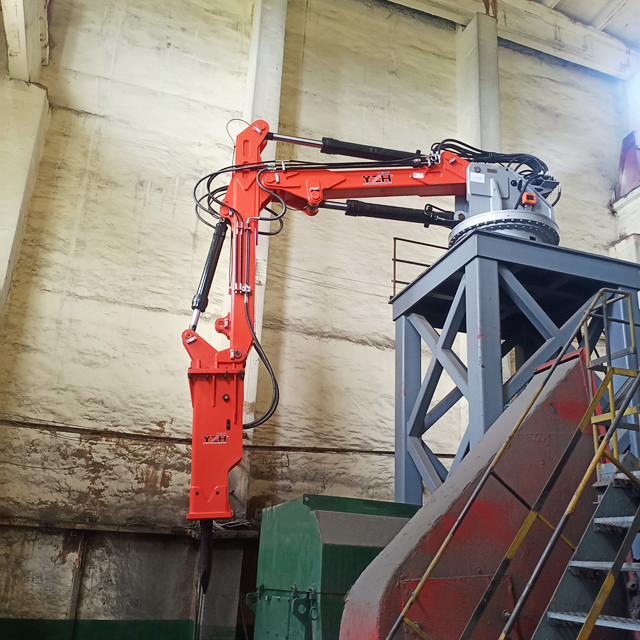
Had a customer call me last month, frustrated as hell. He'd bought a boom system from another supplier six months earlier, and it wasn't working out.
"Kevin, this thing can't reach half the spots I need it to. The controls are so complicated my operators hate using it. And when something breaks, I can't get parts for three weeks."
Classic case of buying the wrong equipment. Could've been avoided with some basic homework upfront.
Here's how to actually evaluate boom systems so you don't end up like this guy.
Before you look at a single spec sheet, figure out what you're really trying to accomplish.
The Basic Questions
Where exactly do you need to break material? Get specific - not just "at the crusher" but "18 feet to the left of the discharge, 12 feet up, sometimes 25 feet out when we get big chunks."
How often? All day, every day? Couple times a week? Just for emergencies?
What kind of material? Limestone that breaks easy, or granite that fights back?
Why This Matters
I've seen operations buy massive boom systems for occasional use. Waste of money. I've also seen people buy undersized equipment that can't handle their actual workload.
One quarry manager told me, "We just need something basic." Then described breaking 8-ton boulders all day long. Basic wasn't gonna cut it.
Sales guys love throwing around numbers. Here's what you should pay attention to:
Reach - But Think 3D
Don't just look at maximum reach. Think about where you actually need to work.
Horizontal reach is obvious - how far out can it go? But vertical reach matters too. Can it get high enough for your application? Low enough?
And what about the dead zones? Every boom has spots it can't reach effectively. Make sure those spots aren't where you need to work.
Lifting Capacity vs. Real World
Spec sheets show maximum lifting capacity under perfect conditions. Real world is different.
That 2000kg lifting capacity might drop to 1200kg when the boom is fully extended. Factor in the weight of your hammer, and you might be down to 800kg of actual breaking force.
Ask for performance curves that show capacity at different positions. Good suppliers have them. Bad suppliers make excuses.
Precision and Control
How accurately can you position the hammer? Some applications need surgical precision. Others just need to hit the general area.
If you're working around expensive equipment or in tight spaces, precision matters. If you're just breaking rocks in an open pit, maybe not so much.
This is where a lot of people screw up.
Basic Controls
Simple joystick operation. Up, down, left, right, hit stuff. Easy to learn, hard to break, cheap to fix.
Perfect for straightforward applications where any operator can figure it out in an hour.
Advanced Controls
Programmable positions, automatic sequences, load sensing, all kinds of fancy features.
Great if you've got skilled operators and complex applications. Nightmare if you don't.
The Reality Check
I sold an advanced system to a small quarry once. Six months later they called asking if they could swap it for basic controls. Their operators couldn't figure out all the features and were afraid to use half the functions.
Match the control complexity to your operation and your people.
Fancy equipment is worthless if you can't keep it running.
What to Actually Ask
Where's the nearest service center? How long for emergency calls? What about parts availability?
Don't just ask - verify. Call their service department directly. Ask other customers in your area about their experience.
Parts Availability
Critical wear items should be available locally or overnight. Specialty components might take longer, but you should know upfront.
I know operations that keep spare parts inventory because they got burned waiting for components. Factor that cost into your decision.
Training and Support
How much training do they provide? Just a quick walkthrough, or comprehensive operator and maintenance training?
What about ongoing support? Phone support, remote diagnostics, regular service visits?
Any decent supplier should have reference customers you can talk to.
What to Ask References
How's the equipment holding up? Any major problems? How's the service support?
Would they buy the same system again? What would they do differently?
Be specific about your application. A boom system that works great in a limestone quarry might struggle with hard granite.
Red Flags
Supplier won't provide references. References are all from years ago. References won't talk specifics about problems.
Good suppliers are proud of their installations and happy to show them off.
Purchase price is just the beginning.
Installation Costs
Foundation work, electrical connections, commissioning. Can add 20-30% to the equipment cost.
Some suppliers include installation, others don't. Make sure you're comparing apples to apples.
Operating Costs
Power consumption, hydraulic fluid, routine maintenance. Adds up over time.
More sophisticated systems often cost more to operate. Factor that into your decision.
Maintenance and Repairs
Scheduled maintenance, wear parts, unexpected repairs. Budget for it upfront.
Ask for maintenance schedules and typical costs. Good suppliers track this data.
Training Costs
Initial operator training, ongoing education, replacement operator training when people leave.
Complex systems require more training. Simple systems are easier to learn but might be less efficient.
If you're making a significant investment, see the equipment work.
Factory Demonstrations
Most suppliers can demonstrate their equipment at their facility. Worth the trip if you're serious.
You can see build quality, meet the engineering team, understand their capabilities.
On-Site Trials
Some suppliers offer trial periods or rental options. Great way to test equipment in your actual conditions.
Not always possible, but worth asking about for major purchases.
Standard equipment is cheaper and faster to deliver. Custom equipment fits your application better.
When Standard Works
Typical applications, standard mounting arrangements, common reach requirements.
Most operations can use standard equipment with minor modifications.
When You Need Custom
Unusual space constraints, special reach requirements, integration with existing equipment.
Custom work costs more and takes longer, but sometimes it's the only way to get what you need.
After all the evaluation, how do you actually choose?
The Spreadsheet Approach
List your requirements, score each option, add up the numbers. Works for some people.
The Gut Check
Which supplier do you trust? Which equipment feels right for your operation?
Both approaches have merit. I usually recommend a combination.
When people ask me how to evaluate boom systems, here's my standard advice:
Start with your actual needs, not what you think you should have.
Focus on the specs that matter for your application.
Match control complexity to your operation and operators.
Service support will determine your long-term satisfaction.
Talk to other users in similar applications.
Factor in total cost of ownership, not just purchase price.
See the equipment work if possible.
Buying based on lowest price alone. Cheap equipment that doesn't work isn't a bargain.
Over-specifying for the application. You don't need a Ferrari to drive to the grocery store.
Under-specifying to save money. Equipment that can't handle your workload is worthless.
Ignoring service support. Great equipment with poor support becomes a nightmare.
Not involving operators in the decision. They're the ones who have to use it every day.
Evaluating boom systems isn't rocket science, but it takes some homework.
Understand your needs, do your research, talk to references, factor in total costs.
Most importantly, work with suppliers who understand your application and will support you long-term.
The right boom system will run for years with minimal problems. The wrong one will be a constant headache.
Take the time to choose wisely. YZH Machine, your boom system premium solution.
Need help evaluating boom systems for your specific application? Let's talk about what actually matters for your operation.


