
Views: 0 Author: YZH Publish Time: 2025-10-24 Origin: https://www.yzhbooms.com/
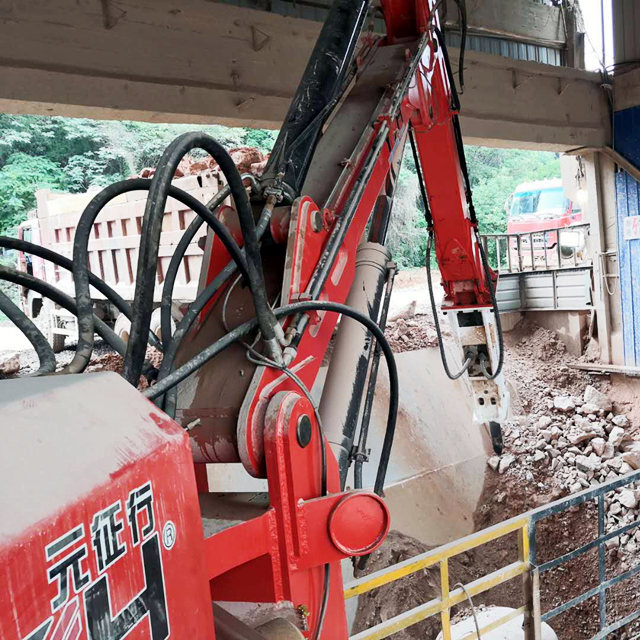
Had a plant engineer walk through our facility last week, pointing at a boom system and asking, "So Kevin, what exactly am I looking at here? I mean, I know it breaks rocks, but how does all this stuff actually work together?"
Fair question. Most people see a boom system as one big machine, but it's really a collection of components that need to work in perfect harmony. When one part fails or isn't properly matched to the others, the whole system suffers.
Let me walk you through what's actually inside a boom system and how it all comes together.
Everything starts with the pedestal base, though most people don't give it much thought.
What It Really Does
The pedestal isn't just holding the boom up - it's absorbing and transferring massive forces. Every time that hammer hits material, shock waves travel back through the boom and into the base.
Think of it as the anchor point for a system that's constantly fighting physics. The boom wants to tip over, the hammer wants to push the whole thing around, and the base has to keep everything stable.
The Hidden Complexity
Inside that seemingly simple pedestal base, there's usually a complex bearing system that allows smooth rotation while handling enormous loads. These bearings take a beating and need to be built right.
Had a customer try to save money with a lighter-duty base. Worked fine for light breaking, but when they hit hard material, the whole system would shake and vibrate. Eventually wore out the bearings and had to rebuild the whole thing.
Foundation Marriage
The base connects to your foundation, and this connection is critical. It's not just bolted down - it's engineered to transfer specific loads safely into the concrete and soil below.
Get this wrong, and you'll crack foundations, loosen bolts, or worse.
This is the visible star of the show, but there's more going on than meets the eye.
Articulated Design
Most boom arms have multiple sections connected by joints. Each joint adds flexibility but also complexity. More joints mean better reach and positioning, but also more potential failure points.
The engineering challenge is making joints strong enough to handle the loads while still allowing smooth movement.
Load Path Reality
Every force from the hammer travels back through the boom structure. The arm isn't just reaching out - it's constantly under stress from the weight it's carrying and the forces from breaking.
Material Choices
High-strength steel construction is standard, but the details matter. Weld quality, stress concentration points, fatigue resistance - all critical for long-term reliability.
Seen boom arms crack at weld points because someone cut corners on fabrication quality. Expensive lesson.
These are what actually move the boom, and they're working harder than most people realize.
Positioning Power
Each joint in the boom typically has its own hydraulic cylinder. These cylinders need to position the boom precisely while handling the full weight of the hammer plus any dynamic loads from breaking.
Smooth Operation
Good cylinders provide smooth, controlled movement. Cheap cylinders are jerky, imprecise, and wear out quickly.
The difference between good and bad cylinders is immediately obvious to operators. Smooth operation means better precision and less operator fatigue.
Seal Technology
Hydraulic cylinders are only as good as their seals. Operating in dusty, dirty environments with high pressures and constant movement, seals take a beating.
Quality seal packages last years. Cheap seals fail in months, leaking hydraulic fluid and losing performance.
This is where hydraulic power gets generated, and it's more complex than most people think.
Pressure and Flow
The power unit needs to provide consistent pressure and flow to operate the boom smoothly. But the demands are constantly changing as the boom moves and the hammer operates.
Heat Management
Hydraulic systems generate heat, especially under heavy use. The power unit needs cooling systems to keep temperatures under control.
Overheated hydraulic fluid breaks down, seals fail, and performance suffers. Good power units manage heat effectively.
Filtration Systems
Clean hydraulic fluid is critical for system life. The power unit includes filtration to keep contaminants out of the system.
Dirty fluid is the enemy of hydraulic systems. It causes wear, clogs valves, and shortens component life dramatically.
Modern boom systems have sophisticated control systems that coordinate all the components.
Operator Interface
The control system translates operator inputs into coordinated movement of multiple hydraulic cylinders. Sounds simple, but the coordination is complex.
Move the joystick one direction, and multiple cylinders need to move in precise coordination to achieve smooth boom movement.
Safety Interlocks
Control systems include safety features that prevent dangerous operations. Can't swing the boom into the crusher structure, can't exceed safe operating angles, automatic shutdown if problems are detected.
Position Feedback
Sensors throughout the system provide feedback to the control system about boom position, hydraulic pressures, and system status.
This feedback allows precise control and early warning of potential problems.
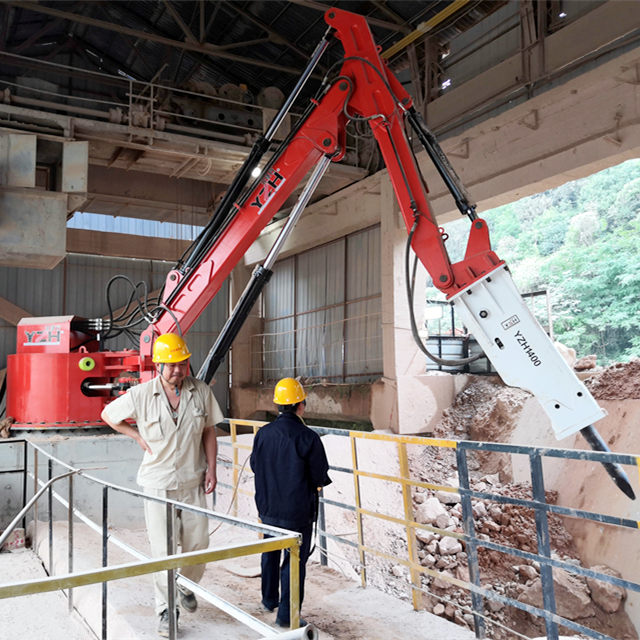
The business end of the system is the hydraulic hammer, but the connection between boom and hammer is critical.
Quick Coupling Systems
Most modern booms use quick-coupling systems that allow fast hammer changes. But these couplings need to handle enormous forces safely.
Hydraulic Supply
The boom provides hydraulic power to the hammer through high-pressure lines. These lines flex constantly as the boom moves and need to be routed carefully to avoid damage.
Force Management
When the hammer hits material, reaction forces travel back through the boom. The connection point sees the full force of every blow.
Here's where the magic happens - all these components working in coordination.
Operator Input
Operator moves joystick, control system interprets the command and coordinates multiple hydraulic cylinders to achieve the desired boom movement.
Hydraulic Flow
Power unit supplies pressurized fluid to cylinders, cylinders move boom sections, position sensors provide feedback to control system.
Force Distribution
Hammer weight and breaking forces travel through boom structure to pedestal base, base transfers forces to foundation.
Safety Monitoring
Control system continuously monitors pressures, positions, and system status, providing warnings and automatic protection.
This is where I see most problems in the field.
Undersized Power Units
Boom moves slowly, poor response, overheating under heavy use. System never performs to its potential.
Weak Base Design
Vibration, instability, premature wear of all components. The whole system suffers when the foundation isn't adequate.
Poor Control Integration
Jerky movement, difficult operation, operator fatigue. Good components performing poorly because they're not properly coordinated.
Mismatched Hammer
Boom can't handle the hammer size, or hammer is too small for the boom capacity. Either way, you're not getting optimal performance.
The real skill in boom system design isn't making individual components - it's making them all work together seamlessly.
System Engineering
Every component affects every other component. Change the hammer size, and you might need different cylinders. Upgrade the power unit, and you might need different control programming.
Testing and Validation
Good manufacturers test complete systems, not just individual components. Real-world performance depends on how everything works together.
Field Support
When problems occur, you need support people who understand the whole system, not just individual components.
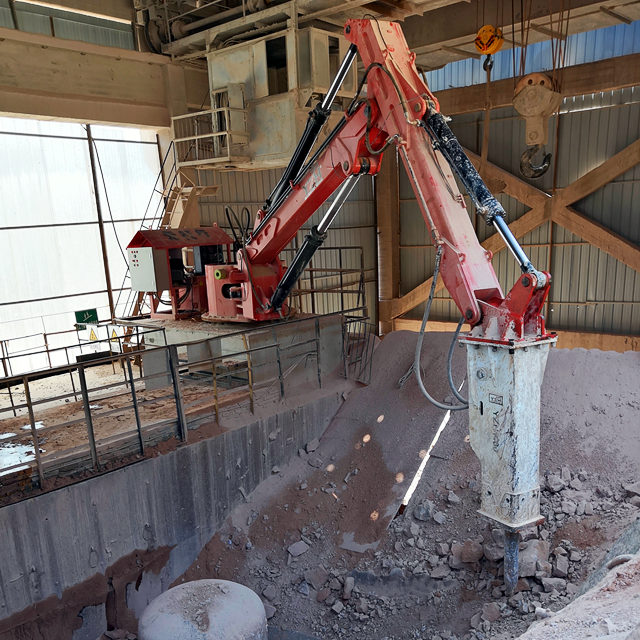
Understanding how boom systems work helps you make better decisions.
System Thinking
Don't just compare individual component specs. Look at how the complete system is engineered and integrated.
Quality Consistency
A system is only as good as its weakest component. Consistent quality across all components matters more than one impressive specification.
Support Requirements
Complex integrated systems need knowledgeable support. Make sure your supplier understands the whole system, not just parts of it.
Questions about how boom system components work in your specific application? Every installation is different, and the component integration needs to match your actual operating requirements.


