
Views: 0 Author: YZH Publish Time: 2025-10-24 Origin: https://www.yzhbooms.com/
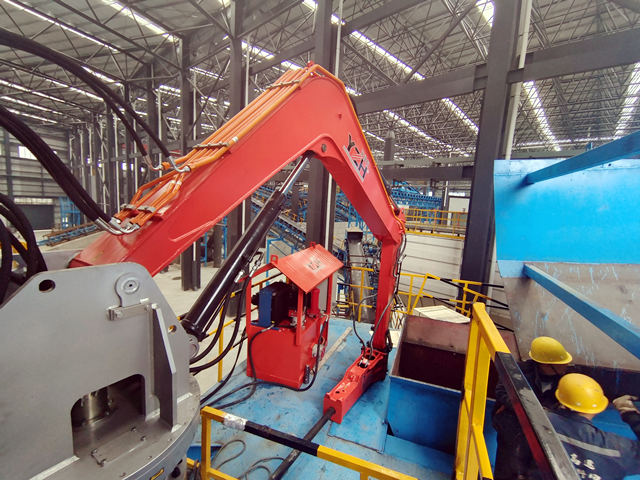
Got a call yesterday from a maintenance manager who'd been researching boom systems for months. "Kevin," he says, "I've got spec sheets from six different manufacturers, and honestly, I'm drowning in numbers. What should I actually be paying attention to?"
Great question. After two decades of selling these systems, I've seen plenty of buyers get lost in technical specifications that sound impressive but don't matter for their specific application.
Let me break down what really counts when you're selecting a pedestal boom system.
Everyone focuses on maximum reach first. Makes sense - you need to cover your work area.
The Real Story
But here's what the spec sheets don't tell you: maximum reach usually means minimum lifting capacity. That impressive reach number? It's probably with no load attached.
Had a quarry specify a system based purely on maximum reach. When we got to the actual application, they needed full lifting capacity at near-maximum reach. The system they'd picked couldn't handle it.
What to Actually Consider
Look at the load chart, not just the maximum reach number. How much can the boom lift at the distances you actually need to work?
And think about your work envelope. Do you need maximum reach in all directions, or just specific areas? Sometimes a shorter boom with better capacity makes more sense.
Practical Reality
Most operations work within a much smaller envelope than maximum reach. Better to have strong performance where you actually work than impressive numbers you'll never use.
This is where the rubber meets the road. Your boom needs to handle the hammer plus whatever forces come from breaking.
Static vs. Dynamic
Static lifting capacity is what the boom can hold steady. Dynamic capacity is what it can handle during actual breaking operations. Big difference.
Breaking creates shock loads, reaction forces, all kinds of dynamic stresses. Your boom needs capacity margin to handle this safely.
Hammer Weight Reality
Don't just match boom capacity to hammer weight. You need significant margin. Rule of thumb: boom should have at least 50% more capacity than hammer weight.
Why? Because breaking isn't gentle lifting. You're dealing with impact forces, material resistance, operator technique variations.
Safety Factor
This isn't just about performance - it's about safety. Overloaded booms fail catastrophically. Seen it happen, and it's not pretty.
Hydraulic specs determine how fast and powerful your system operates.
Flow Rate Reality
Higher flow rates mean faster boom movement and more responsive operation. But your plant needs to supply that flow consistently.
Had an installation where the boom specs looked great, but the plant's hydraulic system couldn't supply adequate flow. Boom moved like it was underwater.
Pressure Requirements
Operating pressure affects lifting capacity and speed. Higher pressure systems are more powerful but require more robust components throughout.
Make sure your plant's hydraulic system can supply the required pressure consistently, not just at peak capacity.
Heat Generation
High-performance hydraulic systems generate heat. Your cooling system needs to handle the thermal load, especially in hot climates or continuous operation.
These specs determine your actual work envelope.
Full Rotation vs. Limited
Full rotation sounds better, but do you actually need it? Limited rotation systems are often more robust and less expensive.
Think about your actual work area. If you're working over a crusher, you might only need 180 degrees of rotation.
Vertical Range
How high and low can the boom reach? This affects your ability to work on different levels, reach into bins, clear high obstacles.
Movement Speed
Faster isn't always better. Smooth, controlled movement is more important than raw speed. Jerky, fast movement reduces precision and increases wear.
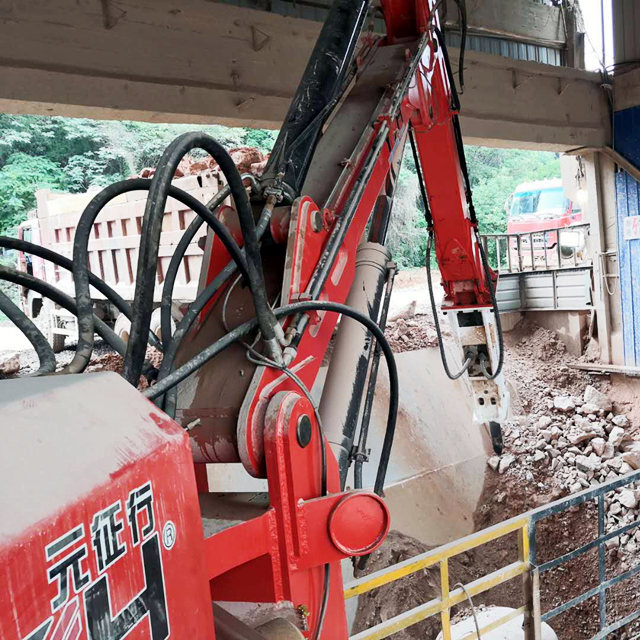
Power consumption affects your operating costs and might require electrical upgrades.
Peak vs. Continuous
Peak power requirements determine your electrical supply needs. Continuous power affects operating costs.
Some systems have high peak demands but reasonable continuous consumption. Others are power-hungry all the time.
Electrical Infrastructure
Make sure your plant can supply the required power. Electrical upgrades can add significant cost to your project.
Efficiency Considerations
More efficient systems cost less to operate long-term. Worth paying extra upfront for lower operating costs.
This is where many projects run into unexpected costs.
Load Calculations
Your foundation needs to handle static weight plus all dynamic forces during operation. Breaking creates significant reaction forces that transfer to the foundation.
Soil Conditions
Foundation requirements vary dramatically based on soil conditions. What works in solid rock won't work in soft clay.
Existing Structures
Retrofitting booms to existing structures requires careful analysis. The structure needs to handle new loads safely.
Installation Complexity
Complex foundation requirements increase installation time and cost. Factor this into your project planning.
After selling hundreds of these systems, here's what actually determines success:
Application Match
The best system is the one that matches your specific application. Impressive specs that don't fit your needs are worthless.
Reliability
Downtime costs more than the price difference between systems. Reliable operation trumps impressive specifications.
Service Support
When something breaks, you need fast, competent service. Great specs don't help if you can't get parts or service.
Operator Comfort
Comfortable operators are productive operators. Ergonomics and ease of operation matter more than peak performance numbers.
Some specifications get too much attention:
Maximum Theoretical Performance
Numbers achieved under perfect laboratory conditions. Real-world performance is always lower.
Exotic Features
Fancy control systems and exotic materials sound impressive but may not add real value for your application.
Competitive Comparisons
Specs that only matter when comparing to competitors. Focus on what you actually need, not what looks better on paper.
Here's my recommended process:
Start with Application
Define what you actually need to accomplish before looking at any specs. Work envelope, capacity requirements, duty cycle.
Match Critical Specs
Identify the 3-4 specifications that are critical for your application. Focus on these first.
Verify Real-World Performance
Ask for references with similar applications. Talk to actual users about real-world performance.
Consider Total Cost
Include installation, operation, and maintenance costs in your evaluation. Lowest purchase price often isn't the best value.
Plan for Growth
Consider future needs. It's expensive to upgrade later if your requirements change.
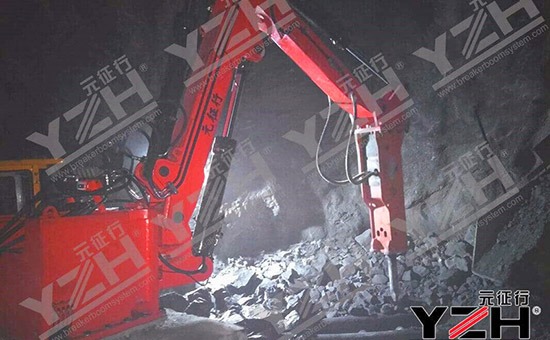
Don't get lost in specification sheets. Focus on what actually matters for your specific application.
The best boom system is the one that reliably does what you need it to do, at a reasonable total cost, with good service support.
Impressive specifications that don't match your needs are just expensive bragging rights.
Need help sorting through specifications for your specific application? Let's talk about what you actually need to accomplish. Every operation is different, and the right specifications depend on your real-world requirements.


