
Views: 0 Author: Kun Tang Publish Time: 2026-01-22 Origin: Jinan YZH Machinery Equipment Co., Ltd.
In the heavy industrial world, efficiency is often defined by how quickly you can reduce large materials into smaller, manageable pieces. This is where the Rockbreaker serves as the unsung hero.
From the depths of underground mines to the heights of urban demolition projects, hydraulic breakers are essential for maintaining workflow. They are the primary solution for clearing blockages, downsizing raw materials, and removing obstacles.
This analysis explores how different sectors depend on this technology and why the Rock Breaker Booms System has become the standard for safety and productivity.
In mining, time is money. The primary crusher is the bottleneck of the entire operation. If the crusher stops, the mine stops.
Mines deal with massive geological formations. When blasted rock is too large to fit through the "grizzly" (the grate over the crusher), it creates a blockage known as "bridging."
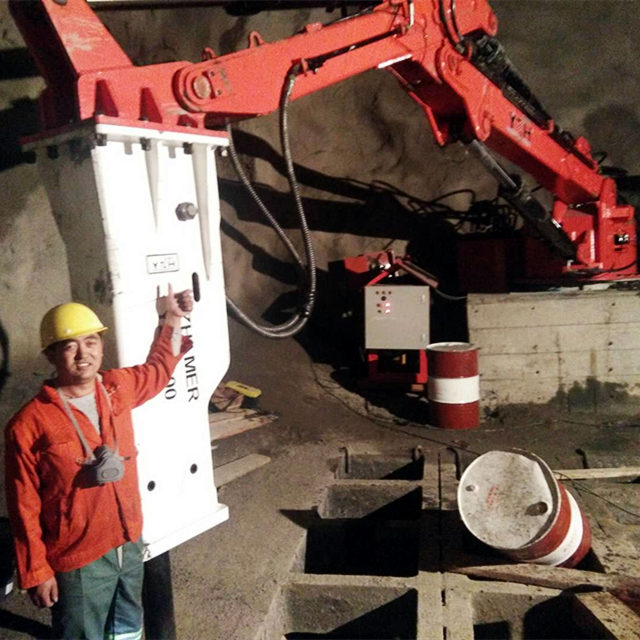
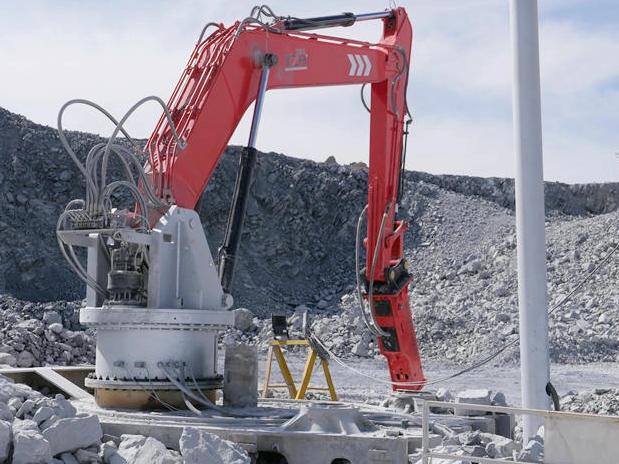
The Application: Stationary Rock Breaker Booms Systems are permanently mounted at the crusher jaw. They allow operators to safely break these oversized rocks and clear blockages without stopping the feed.
The Impact: This eliminates the dangerous practice of sending personnel into the crusher pit to clear jams manually, significantly improving safety and ensuring continuous 24/7 production.
While mining focuses on extraction, construction focuses on preparation and foundation.
Before a skyscraper can go up, the ground must be prepared. Rockbreakers mounted on mobile excavators are essential for:
Trenching: Breaking through hard bedrock to lay utility pipes and cables.
Foundation Work: Leveling uneven rocky ground to pour concrete foundations.
In high-density city centers, traditional blasting is impossible due to regulations. Hydraulic breakers offer a controlled method to excavate hard rock with precision, minimizing the risk to surrounding structures.
Demolition is no longer just about swinging a wrecking ball. It is a precise engineering process, often called "deconstruction."
Rockbreakers are used to surgically remove specific parts of a structure—such as reinforced concrete beams or foundations—while leaving other parts intact.
Safety & Efficiency: Modern breakers can pulverize concrete to separate the steel rebar for recycling. This supports the circular economy and speeds up site clearance.
Urban Renewal: As cities upgrade aging infrastructure, the demand for powerful, mobile breakers to remove old bridges and roads has surged.
Quarries produce the gravel and sand used in concrete and asphalt. Similar to mining, they face the challenge of "oversize" rocks.
After the initial blast, many rocks are still too large for the primary crusher.
The Solution: Instead of using secondary blasting (which stops production and requires site evacuation), quarries use Rock Breaker Booms Systems to break these rocks at the feeder or in the pit.
Benefit: This mechanical breaking method is faster, safer, and allows for better control over the final grain size of the aggregate.
The dependency on rockbreakers is evolving with technology. The future is Smart and Sustainable.
Remote Operation & Automation: The industry is moving toward fully remote-controlled Rock Breaker Booms Systems. Operators can now control the breaker from a comfortable office miles away from the dust and vibration of the site, using 5G technology and HD cameras.
Electrification: To meet environmental goals, mines are shifting from diesel-powered mobile breakers to electric-powered stationary pedestal booms. This reduces carbon emissions and ventilation costs in underground operations.
From clearing crusher jams in a copper mine to removing a concrete bridge in a city center, the Rockbreaker is a universal tool for progress.
For industries like mining and quarrying, the shift towards stationary Rock Breaker Booms Systems represents the pinnacle of this technology—offering a perfect blend of power, safety, and continuous efficiency.
Is your operation optimized for the future?Discover how our specialized breaking solutions can transform your productivity.
Q1: What is the difference between a mobile breaker and a pedestal boom system?
A: A mobile breaker is an attachment mounted on a standard excavator (diesel-powered). A Rock Breaker Booms System is a stationary unit, usually electric-powered, permanently mounted at a specific location like a crusher or grizzly to handle continuous breaking tasks.
Q2: Why are Rock Breaker Booms preferred in mining?
A: They are safer because they remove the operator from the hazard zone. They are also more economical for stationary tasks because they run on electricity (cheaper than diesel) and do not require an expensive excavator undercarriage.
Q3: Can rockbreakers be used underwater?
A: Yes, but they require a specialized underwater kit. This kit includes an airline to supply compressed air to the percussion chamber, preventing water from entering and damaging the piston.
Q4: How does automation affect rockbreaker usage?
A: Automation allows for "Auto-Park" and "Auto-Positioning" features. This reduces operator fatigue and prevents the boom from accidentally hitting the crusher walls, extending the life of the equipment.


