Views: 0 Author: Kun Tang Publish Time: 2026-02-12 Origin: Jinan YZH Machinery Equipment Co., Ltd.
A hydraulic rock breaker is a device of immense power, capable of delivering thousands of joules of energy per strike. In the hands of a skilled operator, it is a precision instrument. In the hands of an untrained one, it is a potential hazard to both personnel and the production line.
Safety in breaking operations is not just about compliance; it is about continuity. An accident or a damaged machine stops production instantly.
This guide outlines the critical safety protocols for operating Rock Breaker Booms Systems, ensuring your site remains productive, compliant, and accident-free.
Safety begins before the hydraulic pump is engaged. A disciplined pre-start routine is the first line of defense against failure.
Before entering the cab or control room:
Clear the Zone: Ensure the swing radius of the boom is clear of personnel and obstacles. For stationary systems, check that the crusher feed is visible and that no maintenance crew is working below.
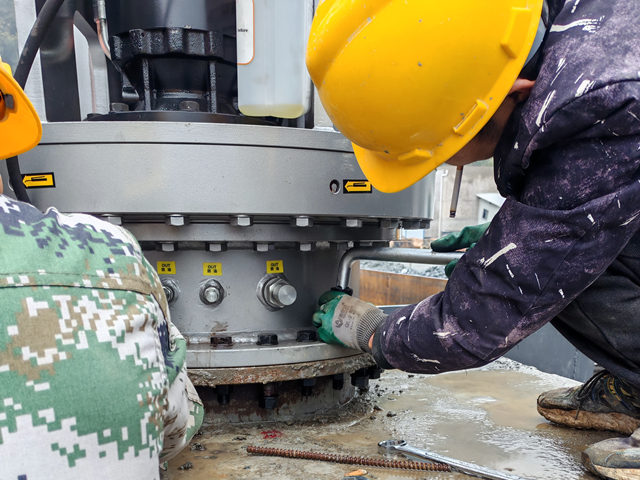
Check the Ground: For mobile units, ensure the excavator is on stable, level ground. For stationary Rock Breaker Booms Systems, visually inspect the concrete foundation and anchor bolts for signs of cracking or movement.
Hydraulics: Inspect hoses for abrasions, leaks, or "ballooning." A pinhole leak under high pressure can inject oil into the skin, a medical emergency.
Hardware: Check the mounting pins and retainer pins. A loose retainer pin can cause the tool (chisel) to fly out during operation.
Grease: Verify that the auto-lube system is functioning. A dry tool bushing creates excessive friction and heat, leading to potential seizure.
Operating a rock breaker requires a specific technique. Incorrect usage is the leading cause of premature metal fatigue and accidents.
The Rule: Always position the tool perpendicular (90 degrees) to the surface of the rock.
The Risk: Striking at an angle causes "side-loading." This bends the tool and puts immense stress on the bushings and piston, leading to snapping tools or flying metal shards.
The Technique: Apply enough down-pressure to lift the front of the carrier (or stabilize the boom) slightly. This ensures the tool is firmly seated against the rock.
The Risk: If the tool is not pressed firmly, the breaker will "blank fire" (dry fire). This sends the shockwave back into the machine, damaging the tie rods and the boom structure.
The Technique: Operate in bursts of 15–30 seconds. If the rock doesn't crack, stop and reposition.
The Risk: Drilling in one spot for too long creates excessive heat, which softens the steel tool, causing it to mushroom or break. It also creates a "dust plug" that dampens the impact.
The Rule: Never use the tool to lever, pry, or move rocks.
The Risk: Rock breaker tools are designed for compressive force (impact), not tensile or shear force (bending). Prying will snap the tool instantly.
Even with skilled operators, hazards exist. Here is how to mitigate them.
The Cause: Breaking hard, brittle rock or striking the edge of a boulder.
The Solution:
Guarding: Ensure the operator cab has certified FOPS (Falling Object Protective Structures) and impact-resistant glass/mesh.
Remote Operation: Utilize the remote control capabilities of modern Rock Breaker Booms Systems to keep the operator in a safe, distant control tower.
The Cause: Worn hoses or pressure spikes.
The Solution: Install "hose burst check valves" and protective sheathing (burst sleeves) on all high-pressure lines. This deflects the hot oil spray away from hot engine parts or the operator.
The Cause: Metal-on-rock impact generates high decibel levels.
The Solution: While modern breakers have silenced housings, hearing protection is mandatory for anyone within the site radius.
Safe operation is a combination of equipment integrity and operator discipline.
A well-maintained Rock Breaker Booms System, operated by a trained professional who follows the "90-Degree Rule" and respects the machine's limits, is one of the safest and most efficient tools on a mine site.
Safety is an investment.Ensure your team is equipped with the safest, most reliable breaking technology available.
Q1: What is "Blank Firing" and why is it dangerous?
A: Blank firing occurs when the piston strikes the tool while the tool is not pressed against the rock. The energy has nowhere to go but back into the breaker body. This can sheer tie rods and cause major structural failure, posing a risk to anyone nearby.
Q2: Can I use the rock breaker to move rocks into the crusher?
A: No. This is the most common cause of tool breakage. The tool is hardened for impact, making it brittle against bending forces. Use the boom arm or a grapple attachment to move material, never the breaker tool itself.
Q3: What PPE (Personal Protective Equipment) is required?
A: At a minimum: Hard hat, safety glasses (with side shields), high-visibility vest, steel-toed boots, and hearing protection. If working near the machine during maintenance, heat-resistant gloves are also necessary due to hot hydraulic components.
Q4: How often should I inspect the mounting bolts?
A: Visually check them at the start of every shift. Use a torque wrench to check them weekly (or every 50 hours). The vibration of the breaker naturally loosens bolts over time, and a loose breaker can tear the mounting adapter off the boom.