The days of static, rigid mining operations are fading. In the modern era of construction and quarrying, agility is the new currency.
Project timelines are tighter, environmental regulations are stricter, and the cost of fuel is rising. Enter the Mobile Hydraulic Rock Breaker (and Mobile Crushing Plants). These dynamic machines have revolutionized how we handle material, allowing operators to bring the processing power directly to the rock face rather than hauling the rock to a distant plant.
But what exactly makes them superior to traditional stationary setups? Here is a detailed breakdown of the seven strategic advantages of going mobile, and how integrating a Rock Breaker Booms System maximizes their potential.
1. Unmatched Mobility and Flexibility
The most obvious advantage is in the name.
The Capability: Unlike stationary plants that require concrete foundations, mobile units are track-mounted or wheel-mounted.
The Benefit: They can be transported between different job sites—from a downtown demolition project to a remote mountain quarry—with minimal downtime. This flexibility allows contractors to bid on diverse projects without needing a separate fleet for each.
2. On-Site Processing (The "Source" Strategy)
Why move waste when you can process it where it lies?
The Efficiency: Mobile breakers allow for immediate crushing and screening at the extraction point.
The Impact: By eliminating the need to transport raw material to a fixed crushing station, you remove the "middleman" of haulage trucks. This significantly streamlines the workflow and reduces traffic congestion on site.
3. Rapid Setup and Deployment
Time is money, especially in short-term construction contracts.
The Speed: A stationary plant can take weeks to assemble. A mobile hydraulic breaker unit can often be offloaded from a trailer and operational within 30 minutes.
The Result: Projects start faster, and the return on investment (ROI) begins almost immediately.
4. Cost Effectiveness: CapEx and OpEx
While the initial investment is significant, the long-term savings are undeniable.
Reduced Haulage: By processing on-site, you drastically cut fuel costs, truck maintenance, and driver wages.
Integrated Design: Mobile units often combine the feeder, crusher, screen, and conveyor into one compact machine. This integration reduces the need for multiple auxiliary machines.
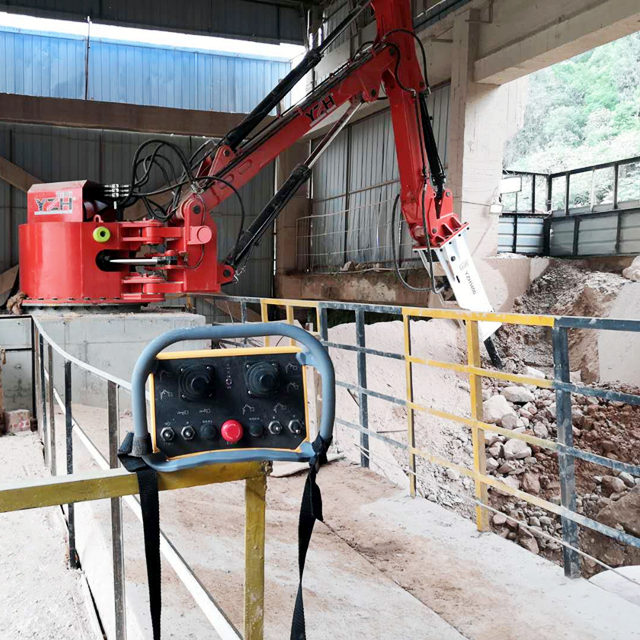
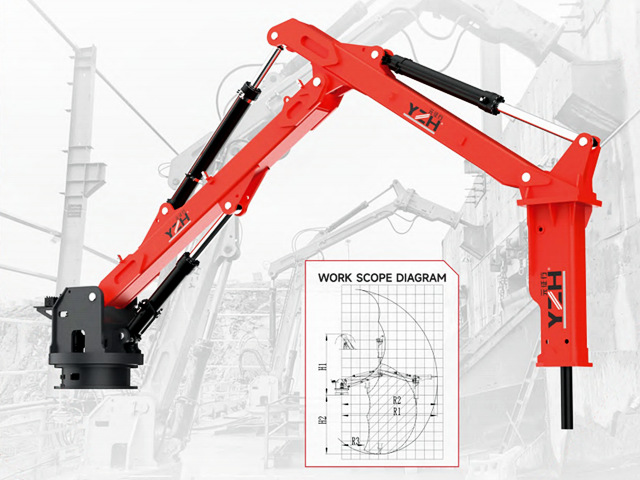
Smart Integration: Many modern mobile plants now come equipped with a small Rock Breaker Booms System mounted over the jaw. This prevents bridging (blockages) without requiring a separate excavator, saving further equipment costs.
5. Environmental Sustainability
Green construction is no longer optional; it is a requirement.
Lower Emissions: Fewer haul trucks mean a massive reduction in the project's carbon footprint.
Dust & Noise Control: Modern mobile units are designed with urban environments in mind, featuring dust suppression sprays and noise-dampening engine compartments, making them compliant with strict city regulations.
6. Versatility Across Applications
A mobile breaker is a "Jack of all trades."
Hard Rock: Capable of crushing granite and basalt in quarries.
Recycling: Perfect for processing reinforced concrete and asphalt in demolition zones.
Adaptability: The settings can be adjusted quickly to produce different aggregate sizes, allowing one machine to serve multiple end-user needs.
7. Enhanced Safety Standards
Safety is the priority in any heavy industry.
Reduced Traffic: Fewer trucks moving around the site means fewer opportunities for collisions.
Remote Operation: Many mobile units now feature remote control capabilities, keeping the operator at a safe distance from dust and vibration.
Jam Clearing: When a mobile crusher gets jammed, it is dangerous for a worker to manually clear it. This is why equipping the unit with a dedicated Rock Breaker Booms System is a critical safety upgrade, allowing blockages to be cleared mechanically and remotely.
Conclusion
The shift toward Mobile Hydraulic Rock Breakers is driven by a need for efficiency, speed, and sustainability.
By bringing the crushing power to the material, companies can slash transport costs and adapt to the changing demands of urbanization and mining. However, mobility should not compromise power. Ensuring your mobile plant is equipped with the right support tools—such as a pedestal boom for jam clearing—is the key to maintaining continuous, safe production.
Looking to enhance your mobile or stationary crushing setup?Explore our range of Rock Breaker Booms Systems, designed to integrate seamlessly with your crushing workflow.
FAQ (Frequently Asked Questions)
Q1: What is the main difference between a mobile and stationary rock breaker?
A: A stationary breaker is permanently fixed on a concrete pedestal (usually at a mine), offering high power for long-term operations. A mobile breaker is mounted on tracks or wheels, offering flexibility to move between sites but typically with lower throughput capacity.
Q2: Can mobile rock breakers handle reinforced concrete?
A: Yes. Mobile impact and jaw crushers are specifically designed to process demolition waste. They often feature magnetic separators to remove the steel rebar from the crushed concrete.
Q3: How does a Rock Breaker Boom help a mobile crusher?
A: Even mobile crushers get jammed by oversized rocks. Installing a small, articulated Rock Breaker Boom directly on the mobile unit allows the operator to break the blockage immediately without stopping the engine or using dangerous manual tools.
Q4: Is a mobile breaker more expensive to run?
A: Generally, no. While maintenance on tracks/tires adds a cost, the massive savings in fuel and truck haulage usually make mobile units cheaper to operate per ton of material processed, especially for short-to-medium duration projects.
Since 2002, YZH has specialized in providing custom pedestal rockbreaker boom systems for mines and quarries worldwide. We combine 20+ years of engineering expertise with rigorous CE-certified quality to boost your productivity and safety through superior design. We don't just sell equipment,we deliver a partnership built on problem-solving.