Views: 0 Author: YZH Publish Time: 2025-11-23 Origin: https://www.yzhbooms.com/
Yesterday I got a call from a plant manager in Nevada who was having problems with his pedestal boom system.
"Kevin, the boom keeps drifting to the left when we're trying to break oversized rocks. Is this normal?"
After some troubleshooting, we found the issue - a worn positioning cylinder that nobody had noticed during routine maintenance.
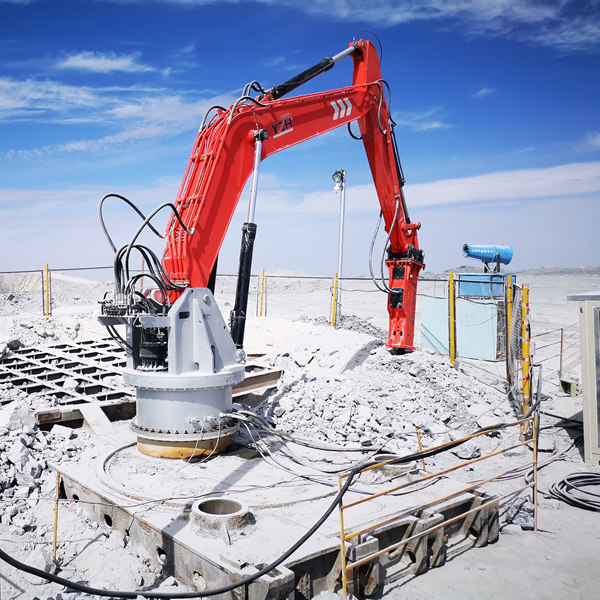
This got me thinking. Most people see a pedestal boom as one big machine, but it's really a collection of precisely engineered components working together. When one component fails, the whole system suffers.
Understanding these components isn't just technical curiosity - it's essential for proper operation, maintenance, and troubleshooting.
Let me walk you through the main components that make these machines work.
Concrete Foundation
The foundation is more critical than most people realize. It's not just a concrete pad - it's an engineered structure designed to handle massive forces.
The foundation must absorb impact forces, support the boom's weight, and resist overturning moments. Poor foundations cause alignment problems, excessive wear, and safety issues.
Anchor Bolt Assembly
High-strength anchor bolts secure the boom to the foundation. These aren't standard construction bolts - they're precision-engineered fasteners designed for dynamic loading.
The bolt pattern and torque specifications are critical. Loose bolts cause vibration and misalignment. Over-tightened bolts can crack the foundation.
Base Plate and Mounting Interface
The base plate distributes loads from the boom structure to the foundation. It includes precision-machined surfaces for proper boom alignment.
Shims and adjustment mechanisms allow for fine-tuning during installation and maintenance.
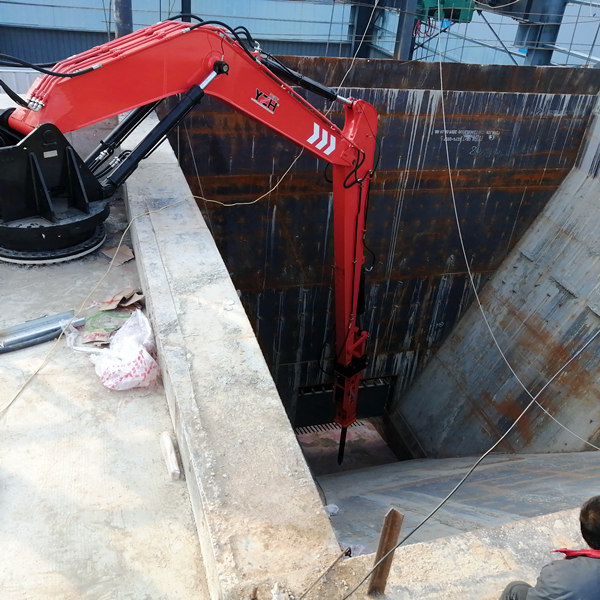
Main Boom Arm
The boom arm is the primary structural component - a heavy-duty steel fabrication designed to handle enormous bending and torsional forces.
Modern boom arms use high-strength steel with optimized cross-sections. The design balances strength, weight, and reach requirements.
Boom Pivot Assembly
The pivot allows the boom to rotate horizontally. It includes heavy-duty bearings, seals, and lubrication systems.
This assembly handles both the boom's weight and the dynamic forces from breaking operations. Proper lubrication is critical for long life.
Boom Extension (if applicable)
Some systems include telescoping boom extensions for increased reach. These add complexity but provide operational flexibility.
Extensions include their own hydraulic cylinders, guides, and locking mechanisms.
Main Hydraulic Pump
The pump provides pressurized hydraulic fluid to power all boom movements. Most systems use variable displacement pumps for efficiency and control.
Pump sizing depends on the boom's hydraulic requirements - flow rate, pressure, and duty cycle.
Hydraulic Reservoir and Cooling
The reservoir stores hydraulic fluid and provides cooling. It includes filtration, temperature monitoring, and fluid level indicators.
Proper fluid temperature is critical for system performance and component life. Many systems include dedicated cooling circuits.
Hydraulic Cylinders
Multiple cylinders control boom movement:
Lift cylinder: Raises and lowers the boom
Rotation cylinder: Provides horizontal rotation
Extension cylinder: Operates telescoping sections (if equipped)
Each cylinder is sized for its specific load and speed requirements.
Control Valves and Manifolds
Hydraulic valves control fluid flow to each cylinder. Modern systems use proportional valves for smooth, precise control.
The valve manifold integrates multiple valves, relief valves, and flow controls into a compact assembly.
Main Control Cabinet
Houses the electrical controls, including the PLC (Programmable Logic Controller), motor starters, and protection devices.
The cabinet is typically rated for industrial environments with proper cooling and protection against dust and moisture.
Operator Control Station
The control station includes joysticks or push buttons for boom operation, emergency stops, and status indicators.
Modern systems often include digital displays showing system status, diagnostics, and operating parameters.
Position Feedback System
Sensors monitor boom position and provide feedback to the control system. This enables precise positioning and automated sequences.
Common sensor types include potentiometers, encoders, and proximity switches.
Safety Systems
Multiple safety systems protect equipment and personnel:
Emergency stop circuits
Overload protection
Position limits
Hydraulic pressure monitoring
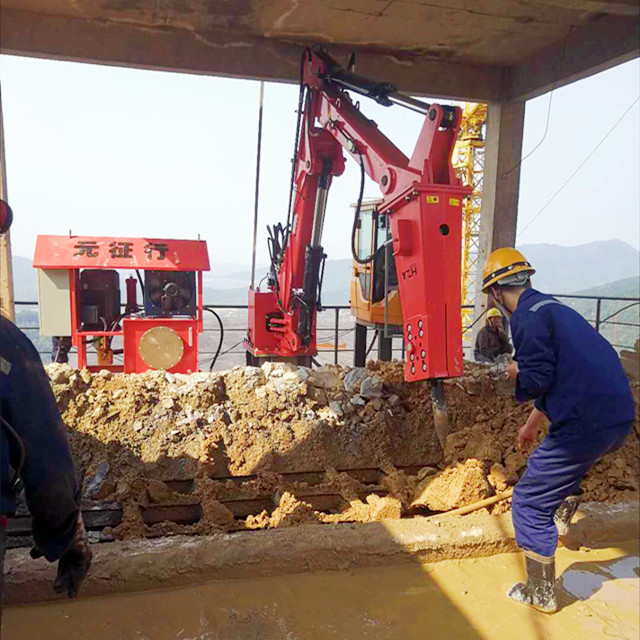
Hammer Mounting Bracket
Connects the hydraulic hammer to the boom. Must handle the hammer's weight plus dynamic forces from breaking operations.
The bracket includes quick-disconnect features for hammer changes and maintenance access.
Hydraulic Connections
High-pressure hydraulic lines supply the hammer with power. Include quick-disconnect couplings for easy hammer changes.
Proper hose routing prevents damage from boom movement and provides service access.
Hammer Selection Interface
Different hammers require different hydraulic flow and pressure. The boom system must accommodate various hammer sizes and types.
Lubrication System
Automatic lubrication systems keep critical components properly lubricated. Include pumps, distribution blocks, and monitoring systems.
Proper lubrication dramatically extends component life and reduces maintenance requirements.
Lighting and Work Area Illumination
LED lighting systems provide illumination for night operations and maintenance work.
Lighting must be positioned to avoid shadows and provide adequate visibility of the work area.
Access Platforms and Safety Features
Platforms, ladders, and guardrails provide safe access for maintenance and operation.
Safety features include non-slip surfaces, fall protection attachment points, and emergency escape routes.
The Operating Sequence
When an operator moves the joystick, the control system:
Receives the input signal
Processes it through the PLC
Sends commands to the hydraulic valves
Monitors position feedback
Adjusts valve positions for smooth movement
Load Distribution
Forces from breaking operations flow through:
Hammer to mounting bracket
Bracket to boom arm
Boom arm to pivot assembly
Pivot to base plate
Base plate to foundation
Each component must handle its portion of the total load.
Hydraulic System Problems
Contaminated fluid, worn seals, and valve problems are common. Regular fluid analysis and filter changes prevent most issues.
Structural Wear
Boom pivot bearings, mounting bolts, and structural connections experience wear from constant loading.
Electrical Issues
Vibration loosens connections, moisture causes corrosion, and heat degrades components.
Foundation Settlement
Over time, foundations can settle or crack, causing alignment problems and increased wear.
Component Accessibility
Good boom design provides access to all components requiring regular maintenance. Poor access leads to deferred maintenance and premature failures.
Replacement Parts
Critical components should have readily available replacement parts. Long lead times for parts mean extended downtime.
Service Documentation
Proper documentation helps technicians understand component relationships and maintenance requirements.
When customers ask about boom components, here's what I emphasize:
Every component matters. The boom is only as reliable as its weakest component.
Understand the system. Knowing how components work together helps with troubleshooting and maintenance planning.
Don't ignore small problems. A worn bearing or loose bolt can cause expensive damage if ignored.
Plan for maintenance. Components have service lives - plan replacements before failures occur.
Pedestal boom systems are complex machines with many interdependent components. Understanding these components helps you:
Operate the system more effectively
Plan maintenance properly
Troubleshoot problems quickly
Make informed purchasing decisions
Each component plays a critical role in the system's performance, reliability, and safety.
Take care of the components, and they'll take care of your breaking operations.
Questions about pedestal boom components or need help with system design? Let's discuss what configuration works best for your operation.