
Views: 0 Author: YZH Publish Time: 2025-11-16 Origin: https://www.yzhbooms.com/
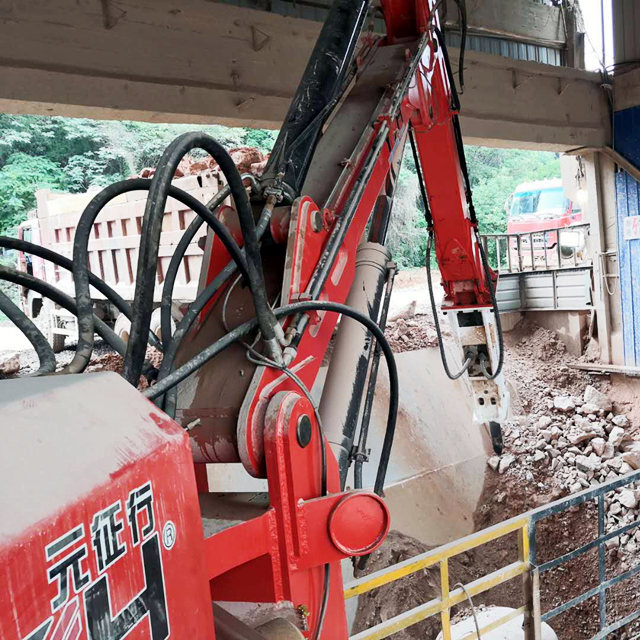
Got off the phone with a quarry manager in Utah last week. He'd been looking at boom systems for months, getting quotes, doing site surveys, the whole nine yards.
Then he calls me up and says, "Kevin, I'm starting to think maybe a boom system isn't right for us. What else is out there?"
Took me about five minutes of asking questions to realize he was absolutely right. His operation moved around too much, didn't have consistent volume in any one spot. A fixed boom would've been a $300K paperweight.
Here's the thing - I sell boom systems for a living, but I'm not gonna sell you something that doesn't make sense for your operation. There are other ways to break rock, and sometimes they're better options.
Think of mobile breakers as boom systems with legs. Same hydraulic hammer doing the work, but mounted on an excavator or dedicated carrier.
When They Actually Work
I worked with a limestone operation in Nevada that had three different crushing stations scattered across their property. They'd run one for a few months, then move to another area.
A boom system at each location would've cost them close to a million bucks. Two mobile breakers handled all three spots for about half that.
The Real Story
Mobile units give you flexibility, but you pay for it. You need an operator who knows what he's doing - positioning the machine, managing the hydraulics, keeping everything running smooth.
And when that mobile unit breaks down, you're dead in the water until it's fixed. With a boom system, you can usually limp along even with problems.
What Nobody Tells You
Mobile breakers beat the hell out of themselves. All that moving around, working in different conditions, bouncing over rough ground - it adds up.
Maintenance costs are higher. Downtime is more expensive because you lose your only breaking capability.
But if you need the flexibility, it's worth it.
Sometimes the old ways are the best ways.
Drop balls are just what they sound like - big steel balls you drop on stuff to break it. No hydraulics, no computers, no fancy controls.
Why They Still Work
Cheap to buy, cheap to run, damn near impossible to break. Any crane operator can run one.
Perfect for operations that only deal with oversized material once in a while. You don't need a dedicated operator sitting around waiting for problems.
The Catch
You can't aim worth a damn. Drop the ball, hope it hits where you want it to, check the results. Sometimes you get lucky on the first shot. Sometimes it takes six tries.
They're also loud as hell. If you've got neighbors who complain about noise, drop balls aren't gonna work.
Where I've Seen Them Work
Small quarries that get the occasional monster rock. Recycling operations dealing with big concrete chunks. Places where precision doesn't matter much.
One gravel pit I know keeps a drop ball setup just for emergencies. They might use it twice a month, but when a boulder jams their crusher, it gets the job done.
When you absolutely have to break something and nothing else will do it, explosives work.
The Good News
Nothing breaks rock like explosives. Massive boulders, solid ledges, stuff that would take all day with mechanical methods - boom, done in seconds.
The Bad News
Licenses, permits, trained personnel, storage requirements, safety zones, blast timing, flyrock control. It's a pain in the ass.
Most crushing operations don't need that kind of firepower. And the regulatory headaches usually aren't worth it unless you're dealing with really massive material.
When It Makes Sense
Big mining operations. Quarries with huge oversize problems. Situations where other methods just won't cut it.
But for most people reading this, explosives are overkill.
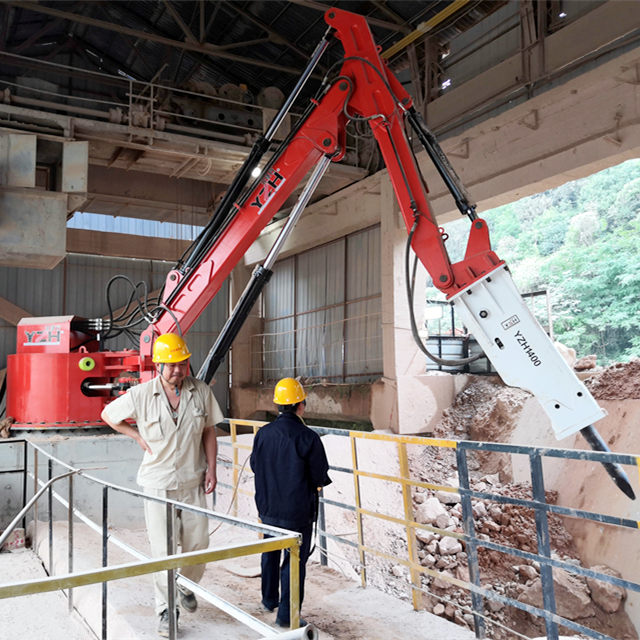
Hydraulic splitters work by jamming wedges into cracks and applying huge pressure to split the rock along natural lines.
Why You'd Want Them
Quiet. Really quiet. Perfect if you're working near hospitals, schools, or anywhere noise is a problem.
Very precise - you control exactly where the rock splits. No flying debris, no vibration, no dust clouds.
Why You Might Not
Slow as molasses. Each piece has to be drilled, splitter inserted, pressure applied, repeat until something happens.
Only works if the rock has natural cracks to exploit. Solid, homogeneous material won't split cleanly.
Where I've Seen Success
Urban demolition work. Operations next to sensitive equipment. Places where noise and vibration will get you shut down.
Had a contractor working next to a data center who couldn't use anything that created vibration. Hydraulic splitters let him work without triggering their earthquake sensors.
Thermal Methods
High-temperature torches that fracture rock with thermal shock. Works great on refractory materials that laugh at mechanical breaking.
Most operations will never need this, but when you do, nothing else works.
Chemical Expansion
Mix chemicals with water, pour into drilled holes, wait for them to expand and crack the rock.
Silent, no vibration, works in tight spaces. Also takes forever and doesn't work in cold weather.
Good for very specialized applications where other methods are impossible.
Forget the sales brochures. Here's what really matters:
How Much Stuff Are You Breaking?
High volume, all day every day? You probably need a boom system or mobile breaker.
Occasional problems? Drop balls or rental equipment might make more sense.
Where Are You Breaking It?
Same spot every day? Fixed boom system.
Multiple locations? Mobile equipment.
Different spot every week? Definitely mobile.
What Are Your Neighbors Like?
Noise complaints? Forget drop balls and explosives.
Vibration sensitive equipment nearby? Hydraulic splitters or chemical methods.
Middle of nowhere? Use whatever works best.
What's Your Budget Look Like?
High upfront cost, low operating cost? Boom systems.
Low upfront cost, higher operating cost? Mobile equipment or simple methods.
Really tight budget? Drop balls and prayer.
Smart operations use different methods for different situations.
Copper mine in Arizona I work with has boom systems at their primary crushers, mobile breakers for secondary locations, and keeps drop balls around for emergencies.
Different tools for different jobs. Makes sense.
When someone asks about alternatives to boom systems, here's my honest take:
If You've Got High Volume in Fixed Locations
Boom systems are still your best bet. Nothing matches the combination of precision, reliability, and productivity.
If You're Moving Around a Lot
Mobile breakers if you've got the volume. Drop balls if it's just occasional problems.
If Noise Is a Problem
Hydraulic splitters if you can live with the slow pace. Chemical expansion for small volumes.
If It's Just Occasional Headaches
Keep it simple. Rent equipment when you need it, or get something basic like drop balls.
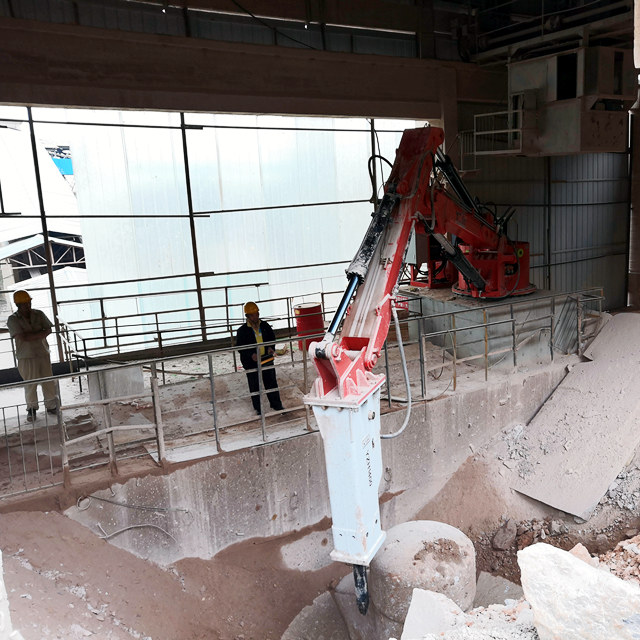
There's no perfect solution for every situation. The best method depends on your specific operation, your constraints, and your budget.
Boom systems are great for what they do, but they're not magic. Sometimes a different approach makes more sense.
The key is being honest about what you actually need instead of what you think you should have.
Don't let anyone sell you equipment just because it's what they've got in stock. Make sure it actually solves your problem.
Trying to figure out the best way to handle oversized material in your operation? Let's talk about what actually works in the real world.


