How Pedestal Booms Transform Primary Crusher Operations (And Why Every Plant Manager Should Care)
By Kevin
Three weeks ago, I got an urgent call from a plant manager in Arizona.
"Kevin, our primary crusher is down again. We've got a massive boulder stuck in the throat, and it's going to take hours to clear with our current setup. This is the third time this month."
Sound familiar? If you're running a primary crusher, you've probably been there.
Primary crushers are the workhorses of mining and aggregate operations, but they're also the biggest bottleneck when things go wrong. One oversized rock can shut down your entire operation, costing thousands of dollars per hour in lost production.
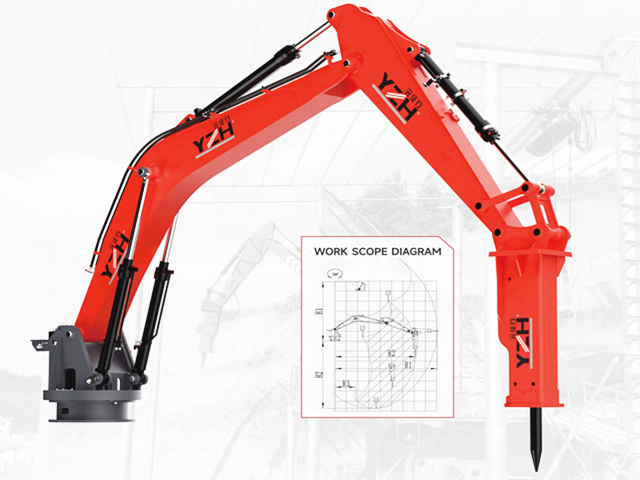
That's where pedestal boom systems come in. They're not just another piece of equipment - they're a complete game-changer for primary crusher operations.
Let me walk you through how these systems work in primary crusher applications and why they've become essential equipment for serious operations.
The Primary Crusher Challenge
Why Primary Crushers Are Different
Primary crushers handle the biggest, nastiest material straight from the mine or quarry. Unlike secondary or tertiary crushers that work with pre-sized material, primary crushers deal with:
Massive rocks that can exceed the crusher's feed opening
Irregular shapes that can bridge across the opening
Extremely hard materials that resist breaking
Unpredictable material flow from trucks and conveyors
The Traditional Approach (And Its Problems)
Before pedestal booms became common, most operations handled oversized material with mobile equipment - excavators, wheel loaders, or dedicated mobile rockbreakers.
I've watched this approach for years, and the problems are always the same:
Mobile equipment operators work in dangerous conditions right next to the crusher. One slip, one mechanical failure, and you've got a serious accident.
The equipment takes time to position and reposition. While the operator is maneuvering, your crusher sits idle and your production stops.
Mobile equipment breaks down frequently in these harsh conditions. Dust, vibration, and constant impact loading take their toll.
You need skilled operators available around the clock. Good mobile equipment operators are expensive and hard to find.
How Pedestal Booms Change the Game
Strategic Positioning
The key to effective primary crusher applications is positioning the pedestal boom where it can reach the entire crusher feed area. This typically means:
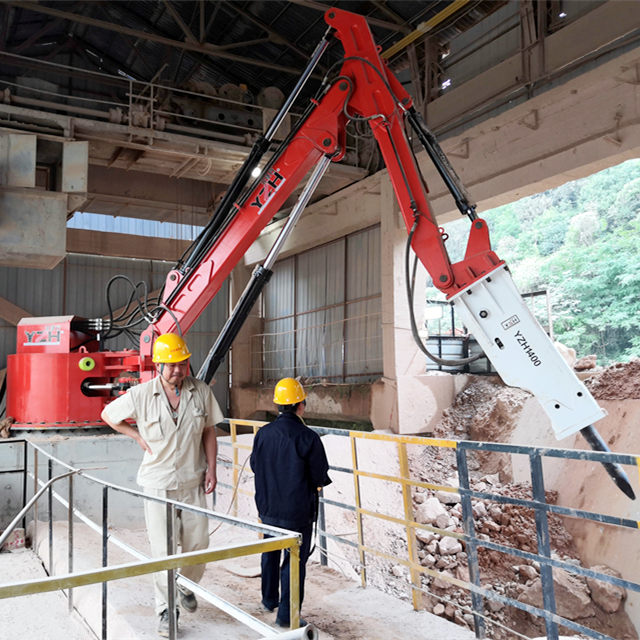
Installing the boom adjacent to the crusher, with the hammer positioned to reach across the full width of the feed opening.
Positioning at the optimal height to strike down into the crusher throat at the most effective angle.
Ensuring the boom can reach problem areas where material tends to bridge or hang up.
I worked with a copper mine that was initially skeptical about boom positioning. "There's no way one boom can cover our entire crusher opening," the plant manager told me.
After we did the reach analysis and showed him the coverage area, he was convinced. The boom could reach every corner of their crusher feed area with room to spare.
The Breaking Process
When oversized material appears in the crusher feed, here's how the pedestal boom handles it:
The operator identifies the problem material from a safe, enclosed control room.
Using joystick controls, the operator positions the boom and hammer precisely over the target rock.
The hydraulic hammer delivers powerful, controlled impacts to break the rock into manageable pieces.
The broken material falls through the crusher naturally, and production continues.
The entire process takes minutes instead of the hours required with mobile equipment.
Integration with Crusher Operations
Modern pedestal boom systems integrate seamlessly with primary crusher operations:
Automated Safety Systems: The boom automatically stops if the crusher stops, preventing damage to crusher internals.
Position Memory: Operators can program common positions for quick response to typical problems.
Remote Operation: Operators work from climate-controlled rooms away from noise, dust, and danger.
Continuous Monitoring: Systems provide real-time feedback on hammer performance and boom position.
Real-World Applications I've Seen
Gyratory Crushers
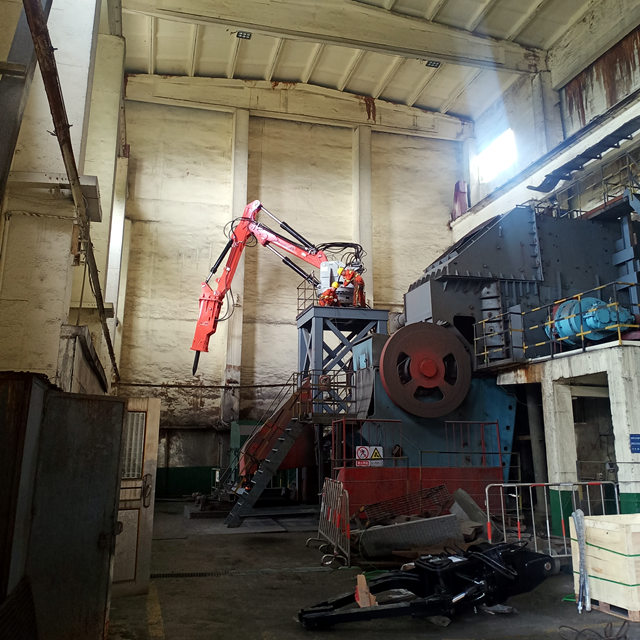
Gyratory crushers are probably the most common application for pedestal booms. The large feed opening and high throughput make them perfect candidates.
A limestone quarry in Texas installed a pedestal boom on their primary gyratory after years of problems with bridging material. The boom eliminated their mobile equipment needs entirely and increased crusher availability significantly.
The boom reaches across the entire gyratory opening and can break material anywhere in the feed area. When material bridges across the opening, the boom breaks it quickly without stopping the crusher.
Jaw Crushers
Jaw crushers present unique challenges because of their rectangular feed opening and crushing action. Pedestal booms for jaw crushers need special positioning to work effectively.
I've installed booms on large jaw crushers where the boom is positioned to strike material as it enters the crusher throat. This prevents jamming and keeps material flowing smoothly.
Mobile Primary Crushers
Even mobile primary crushing plants benefit from pedestal booms. While the crusher moves periodically, it operates from fixed positions for extended periods.
A gold mine in Nevada uses a mobile primary crusher with a pedestal boom. When they move the crusher to a new location, they relocate the boom as well. The investment is still worthwhile because of the improved safety and productivity.

The Operational Benefits
Crusher Availability
This is the big one. Primary crushers with pedestal booms typically see dramatic improvements in availability.
Instead of shutting down for hours to clear jams, operators clear problems in minutes. The crusher keeps running, and production continues.
One iron ore operation told me their primary crusher availability improved from 85% to 95% after installing a pedestal boom. That 10% improvement translated to significant additional production.
Safety Improvements
Removing mobile equipment from the crusher area eliminates most safety risks. Operators work from enclosed control rooms instead of exposed equipment cabs.
The safety improvement alone often justifies the pedestal boom investment, especially for safety-conscious companies.
Operational Efficiency
Pedestal booms respond faster than mobile equipment. When a problem occurs, the boom is already in position and ready to work.
Mobile equipment needs time to start up, warm up, and position. Pedestal booms are ready instantly.
Maintenance Advantages
Pedestal booms require less maintenance than mobile equipment in crusher applications. They don't deal with the mobility stresses that mobile equipment faces.
The boom operates in a fixed location with predictable loads. Mobile equipment deals with travel, positioning, and constantly changing operating conditions.
Design Considerations for Primary Crushers
Reach Requirements
The boom must reach every area where problems can occur. This includes:
The full width of the crusher feed opening
Areas where material tends to bridge
Conveyor discharge points
Stockpile areas adjacent to the crusher
Hammer Selection
Primary crusher applications typically require large, powerful hammers. The material is big and tough, requiring significant impact energy.
Hammer selection depends on the crusher size, material characteristics, and expected duty cycle.
Foundation Design
Primary crusher applications generate significant forces. The foundation must handle not only the boom's weight but also the dynamic forces from breaking large rocks.
Foundation design is critical for long-term performance and safety.
Integration with Plant Systems
The boom control system integrates with crusher controls, conveyor systems, and plant safety systems.
Modern installations include automated sequences that respond to crusher conditions and optimize the breaking process.
What Plant Managers Tell Me
"It's like having a skilled operator available 24/7"
Unlike mobile equipment that requires operators, pedestal booms are always ready. Night shift, weekends, holidays - the boom is there when you need it.
"Our insurance company loves it"
Removing mobile equipment from crusher areas significantly reduces safety risks and insurance exposure.
"The payback was faster than we expected"
Most operations see payback in two to three years from improved crusher availability and reduced mobile equipment costs.
"We should have done this years ago"
This is probably the most common comment I hear from plant managers after installation.

The Bottom Line
Primary crusher applications are where pedestal booms deliver the most value. The combination of improved safety, increased availability, and reduced operating costs makes them essential equipment for serious operations.
If you're running a primary crusher and dealing with oversized material problems, a pedestal boom system will transform your operation.
The question isn't whether you need one - it's how quickly you can justify the investment and get one installed.
Every day you wait is another day of lost production, safety risks, and unnecessary mobile equipment costs.
Ready to eliminate primary crusher headaches? Let's discuss how a pedestal boom system can transform your operation.