
Views: 0 Author: Kun Tang Publish Time: 2026-01-21 Origin: Jinan YZH Machinery Equipment Co., Ltd.
In the demanding environments of mining and quarrying, a Rockbreaker is often the heartbeat of production. Whether it is mounted on a mobile excavator or installed as a stationary Rock Breaker Booms System over a crusher, this equipment endures immense physical stress every day.
However, durability is not an excuse for neglect. Skipping a pre-start inspection can lead to catastrophic hydraulic failure, expensive downtime, and serious safety hazards.
This guide outlines the critical maintenance checks every operator must perform before pulling the lever, ensuring your equipment remains safe, efficient, and profitable.
A thorough inspection focuses on the four "lifelines" of the machine: Structure, Hydraulics, Lubrication, and the Tool itself.
Before the machine starts, walk around it. Look for stress fractures or cracks on the boom arm, the breaker housing, and the mounting bracket.
What to look for: Hairline cracks near weld points. If ignored, the vibration of the breaker will cause these to snap, potentially dropping the equipment.
The hydraulic system is the muscle of the rockbreaker.
Hoses & Fittings: Check for weeping oil, wet spots, or abrasion on the hose outer layers. A burst hose sprays hot oil at high pressure, which is a severe fire and injection hazard.
Connections: Ensure all quick-couplers and flange bolts are tight. Loose connections introduce air into the system, causing "cavitation" that destroys the pump.
Friction is the enemy. The tool bushing and the chisel generate massive heat.
Grease Levels: Check that the auto-lube canister is full. If greasing manually, ensure fresh grease is visible at the tool collar.
The Rule: A dry tool is a broken tool. Without grease, the metal-on-metal contact will weld the tool to the bushing (seizing).
The chisel (tool bit) takes the direct impact.
Wear: Check the tool for "mushrooming" at the tip.
Retainer Pins: These pins hold the tool in place. If they are worn or the locking mechanism is loose, the heavy tool bit can slide out during operation, becoming a deadly projectile.
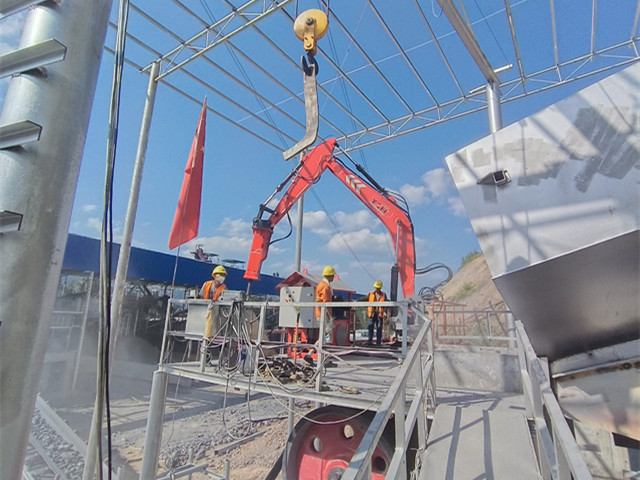
Maintenance isn't a one-time event; it's a cycle.
Time required: 10 minutes.
Action: Visual walkaround. Check for loose bolts on the Rock Breaker Booms System pedestal. Verify grease flow. Inspect hydraulic hoses for leaks.
Time required: 1 hour.
Action: Torque all side bolts and tie rods. Check the Nitrogen (N2) gas pressure in the backhead (low gas pressure reduces impact power). Inspect the wear limits of the tool bushings.
Action: Full teardown. Replace all hydraulic seals and diaphragms to prevent internal bypassing. This should be done by certified technicians.
Why invest time in these checks? The return on investment (ROI) is immediate.
Enhanced Safety: Detecting a loose pin or a fraying hydraulic hose before it fails prevents accidents that could injure operators or ground staff.
Extended Equipment Life: A well-lubricated and tightened breaker lasts years longer than a neglected one. This maximizes the value of your Rock Breaker Booms System.
Reduced Repair Costs: Replacing a $50 seal is cheap. Replacing a $5,000 piston because the seal failed is expensive. Preventative maintenance stops small problems from becoming big bills.
An efficient rockbreaker is a safe rockbreaker. The 10 minutes you spend inspecting your equipment today will save you hours of downtime tomorrow.
By strictly following these visual, hydraulic, and lubrication checks, you ensure that your Rock Breaker Booms System continues to deliver maximum tonnage with minimal risk.
Ready to upgrade your site safety and efficiency?Explore our full range of heavy-duty breaking solutions designed for durability and ease of maintenance.
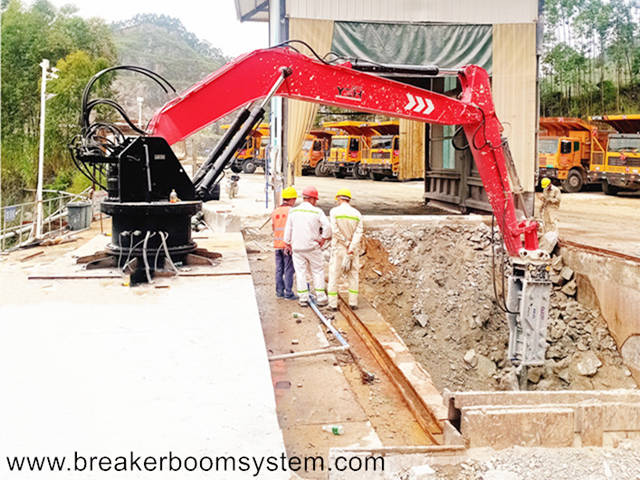
Q1: How often should I grease my rock breaker?
A: If greasing manually, you should apply grease every 2 hours of continuous operation. Ideally, use an automatic lubrication system which injects a small amount of grease every time the hammer fires.
Q2: What are the signs of a failing hydraulic hose?
A: Look for "blisters" or bubbles on the hose cover, exposed wire reinforcement (braiding), or wetness near the crimped ends. If you see any of these, replace the hose immediately.
Q3: Why is my rock breaker losing impact power?
A: The most common causes are low Nitrogen gas pressure in the accumulator or internal hydraulic leakage due to worn seals. A quick pressure check can confirm if it needs a recharge.
Q4: Can I inspect the breaker while the machine is running?
A: No. Never approach or inspect the hydraulic lines while the system is pressurized. Always shut down the engine and relieve hydraulic pressure before touching components.


