
Views: 0 Author: Kun Tang Publish Time: 2025-12-30 Origin: Jinan YZH Machinery Equipment Co., Ltd.
An excavator is only as good as the tool at the end of its boom. While the machine provides the power, it is the hydraulic attachment that performs the work. Whether you are tearing down a steel structure, sorting scrap, or laying a foundation, choosing the right attachment transforms your standard excavator into a versatile, multi-purpose powerhouse.
However, with hundreds of options on the market, selecting the correct tool can be daunting. Mismatched attachments can lead to poor performance, hydraulic system damage, and safety hazards. This guide explores the essential types of attachments, key selection criteria, and maintenance tips to help you maximize your equipment’s ROI.
Different projects demand different tools. Understanding the specific function of each attachment is the first step toward efficiency. You can explore our full range of Hydraulic Attachments to see these tools in action.
Best For: Heavy-duty demolition and metal recycling.
Function: Designed to cut through steel beams, rebar, and scrap metal like a giant pair of scissors. High-quality shears feature 360-degree rotation for precise positioning.
Best For: Material handling, waste recycling, and loading.
Function: Available in various configurations (orange peel, stone grapple, sorting grapple), these tools allow operators to pick, sort, and load irregular materials with precision.
Best For: Primary and secondary demolition, concrete recycling.
Function: These jaws crush concrete to separate it from rebar, making disposal and recycling easier. They are essential for reducing debris volume on-site.
Best For: Foundation work, fencing, and tree planting.
Function: A hydraulic motor drives a spiral flighting into the ground, creating clean, deep holes in various soil conditions.
Best For: Foundation construction and sheet piling.
Function: These attachments use high-frequency vibrations to drive piles into the ground or extract them, offering a faster and quieter alternative to traditional impact hammers.
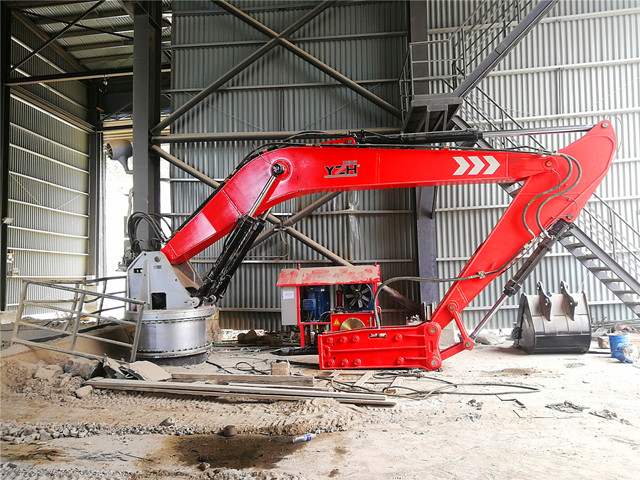
Buying an attachment isn't just about "will it fit?" It’s about "will it work efficiently?"
Weight Class: The attachment must match the excavator's tonnage. An attachment that is too heavy can cause the machine to tip; one that is too light will be damaged by the excavator's breakout force.
Hydraulic Flow & Pressure: This is the most critical technical factor. You must match the attachment's required Liters Per Minute (LPM) and Bar (Pressure) with your excavator’s output.
Expert Tip: If the excavator provides too much flow, you risk overheating the attachment; too little, and the tool will be sluggish.
Cycle Time: How fast can the jaw open and close? Faster cycle times mean more cuts or grabs per hour.
Durability: Look for attachments made from wear-resistant steel (like Hardox) to withstand abrasive environments.
Demolition: Prioritize shearing force and jaw width.
Forestry: Prioritize grip strength and rotation speed.
Investing in premium attachments like those from YZH offers tangible operational benefits.
A dedicated attachment performs a task 5x to 10x faster than a general-purpose bucket. For example, using a hydraulic shear to process scrap steel is infinitely faster and safer than using a torch or a bucket thumb.
Fuel Savings: Efficient hydraulic design minimizes energy waste, meaning your excavator burns less fuel per ton of material processed.
Reduced Labor: One operator with the right attachment can do the work of a manual crew, significantly lowering payroll and insurance costs.
To protect your investment, a strict maintenance schedule is non-negotiable.
Daily Greasing: Hydraulic attachments have high-stress pivot points. Grease them every few hours of operation to prevent bushing wear.
Hose Inspection: Check hydraulic hoses for leaks, cracks, or rubbing. A burst hose causes immediate downtime and environmental cleanup costs.
Bolt Tightening: The vibration from breakers and hammers can loosen bolts. Check torque settings weekly.
Case Study: Urban Demolition EfficiencyA mid-sized demolition contractor in Southeast Asia faced a challenge: dismantling a reinforced concrete structure in a noise-sensitive urban area.
The Challenge: Traditional wrecking balls were too uncontrolled, and jackhammers were too slow.
The Solution: They equipped their 20-ton excavator with a YZH Hydraulic Pulverizer.
The Result: The contractor completed the project 30% ahead of schedule. The pulverizer quietly crushed the concrete and separated the rebar for recycling revenue, proving that the right Hydraulic Attachment pays for itself.
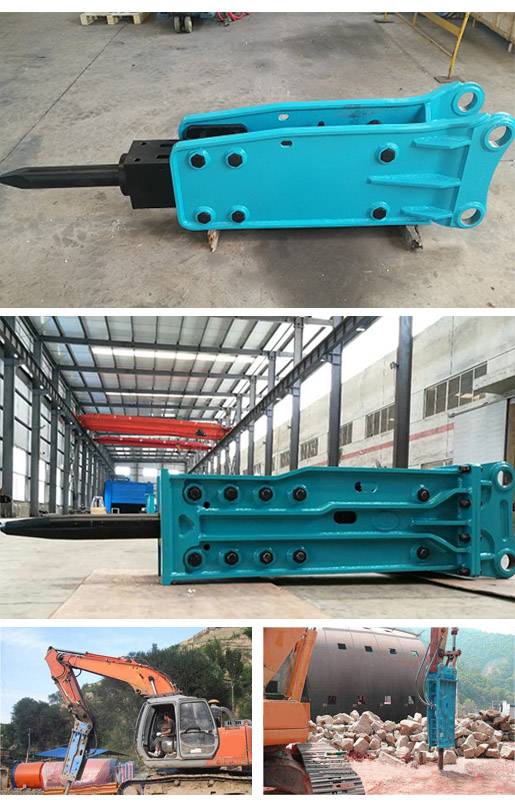
Choosing the right hydraulic attachment is a strategic business decision. It requires balancing the technical specifications of your carrier machine with the operational demands of your job site.
Whether you need the cutting power of a shear or the precision of a grapple, ensuring compatibility and quality will lead to safer, faster, and more profitable projects.
Ready to upgrade your fleet's capabilities?Explore our comprehensive range of high-performance Hydraulic Attachments and contact our engineering team for a compatibility check today.
Q1: How do I know if an attachment fits my excavator?
A: You need to check three things: 1) The pin diameter, 2) The ear width (dipper width), and 3) The pin center-to-center distance. Additionally, ensure your excavator's hydraulic flow (LPM) and pressure matches the attachment's requirements.
Q2: Can I use a larger attachment on a smaller excavator?
A: No. This is dangerous. It can cause the excavator to become unstable and tip over. It also puts excessive strain on the boom and arm, leading to structural failure. Always stick to the recommended weight class.
Q3: Do I need a special hydraulic circuit for a rotating grapple?
A: Yes. A rotating grapple typically requires two hydraulic circuits: a two-way circuit for opening/closing the jaw, and a separate two-way circuit for the rotation function.
Q4: How often should I service my hydraulic breaker?
A: Besides daily greasing, hydraulic breakers usually require a gas pressure check (Nitrogen) every 500 hours and a seal kit replacement every 1000 hours, depending on usage intensity.


