You are here: Home » News » Industry News » The Ultimate Guide to Rock Crusher Maintenance and Care: Extending Equipment Lifespan

The Ultimate Guide to Rock Crusher Maintenance and Care: Extending Equipment Lifespan

Views: 0     Author: Kun Tang     Publish Time: 2025-12-24      Origin: Jinan YZH Machinery Equipment Co., Ltd.

In the aggregate and mining industries, a rock crusher is the heartbeat of production. When it stops, revenue stops. Yet, many operators fall into the trap of "run-to-failure" maintenance—fixing machines only when they break down. This reactive approach is costly, dangerous, and inefficient.

A robust maintenance strategy is not just about tightening bolts; it is about preserving the asset's value and ensuring the safety of your workforce. This guide outlines the essential steps for maintaining rock crushers, from daily inspections to advanced troubleshooting, helping you maximize uptime and ROI.

1. Regular Inspection: The First Line of Defense

You cannot fix what you do not know is broken. A disciplined inspection routine is critical for catching minor issues before they become catastrophic failures.

Key Inspection Points

  • Wear Liners: Check the liners (mantle/concave for cones, jaw plates for jaws) daily. Look for uneven wear patterns, which can indicate improper feeding.

  • Toggle Plates and Springs: In jaw crushers, ensure the toggle plate is seated correctly and tension springs are not fatigued.

  • Conveyor Belts: Inspect the discharge belt for tears or misalignment caused by sharp aggregate.

  • Safety Guards: Ensure all flywheels and drives are properly guarded.

Identifying Potential Issues

Listen to your machine. A change in the "rhythm" of the crusher, unusual vibration, or a sudden spike in amperage draw are often the first signs of internal distress.
In the aggregate and mining industries, a rock crusher is the heartbeat of production. When it stops, revenue stops. Yet, many operators fall into the trap of "run-to-failure" maintenance—fixing machines only when they break down. This reactive approach is costly, dangerous, and inefficient. A robust maintenance strategy is not just about tightening bolts; it is about preserving the asset's value and ensuring the safety of your workforce. This guide outlines the essential steps for maintaining rock crushers, from daily inspections to advanced troubleshooting, helping you maximize uptime and ROI. 1. Regular Inspection: The First Line of Defense You cannot fix what you do not know is broken. A disciplined inspection routine is critical for catching minor issues before they become catastrophic failures. Key Inspection Points • Wear Liners: Check the liners (mantle/concave for cones, jaw plates for jaws) daily. Look for uneven wear patterns, which can indicate improper feeding. • Toggle Plates and Springs: In jaw crushers, ensure the toggle plate is seated correctly and tension springs are not fatigued. • Conveyor Belts: Inspect the discharge belt for tears or misalignment caused by sharp aggregate. • Safety Guards: Ensure all flywheels and drives are properly guarded. Identifying Potential Issues Listen to your machine. A change in the "rhythm" of the crusher, unusual vibration, or a sudden spike in amperage draw are often the first signs of internal distress. (Image Suggestion: A mechanic inspecting the jaw plates of a large crusher with a flashlight.)Alt Text:Mechanic performing a daily wear inspection on rock crusher jaw plates to prevent equipment failure. 2. Cleaning and Lubrication Friction and dust are the enemies of heavy machinery. Proper lubrication is the single most effective way to extend the life of bearings and moving parts. The Cleaning Protocol Crusher environments are notoriously dusty. Accumulation of dust around the breather valves or oil tank can lead to contamination. • Clean Breathers: Ensure the oil breathers are free of debris to prevent pressure build-up. • Clear the Feeder: Ensure the feeder area is free of material buildup that could fall into the crusher during maintenance. Lubrication Best Practices • Grease Schedule: Follow the OEM’s manual strictly. Over-greasing can be just as damaging as under-greasing, causing seal failures and overheating. • Oil Analysis: Regularly sample the lubrication oil. High levels of silica in the oil indicate a seal breach, while metal particles suggest bearing failure is imminent. 3. Troubleshooting and Handling Blockages Even with perfect maintenance, operational issues occur. Knowing how to solve them safely is key. Common Faults • Overheating: Often caused by dirty oil coolers or insufficient airflow. Check your heat exchangers. • Excessive Vibration: usually indicates a loose foundation bolt or an unbalanced flywheel due to wear. The Problem of "Bridging" (Blockages) One of the most frequent "maintenance" issues isn't a mechanical failure, but a blockage caused by oversized rock. • The Risk: Using manual tools, pry bars, or explosives to clear a jammed crusher is incredibly dangerous and damages the crusher liners. • The Solution: The safest and most efficient way to handle this is by installing a Pedestal Boom System. A pedestal boom acts as a permanent maintenance tool. Mounted at the crusher inlet, it allows operators to break oversized rocks or rake material into the chamber remotely. This prevents the physical damage caused by "shock loading" the crusher and eliminates the need for personnel to enter the danger zone. (Image Suggestion: A YZH Pedestal Boom System positioned over a crusher intake, ready to clear a blockage.)Alt Text:YZH Pedestal Boom System installed at a mine site to safely clear rock crusher blockages and reduce downtime. 4. Maintenance Records Memory is unreliable; data is not. Keeping a detailed logbook is essential for long-term health. What to Record • Date and Time of every service. • Parts Replaced: Part numbers and brands. • Oil Temperatures: Track trends over time. • Operator Notes: Any anomalies reported during the shift. These records allow you to move from "Preventative Maintenance" to "Predictive Maintenance," ordering spare parts exactly when historical data suggests they will be needed. Conclusion The longevity of a rock crusher is directly proportional to the quality of its maintenance. By implementing a rigorous inspection schedule, ensuring clean lubrication, and utilizing modern auxiliary tools like Pedestal Boom Systems to handle operational stresses, you can significantly extend the life of your equipment. Remember: Maintenance cost is a fraction of the cost of a new machine—or the cost of a week of downtime. FAQ (Frequently Asked Questions) Q1: How often should I check the oil in my rock crusher? A: Oil levels should be checked daily before startup. A full oil change should be performed according to the manufacturer's hours (typically every 500–1000 hours), or sooner if oil analysis shows contamination. Q2: What is the safest way to unblock a jammed jaw crusher? A: Never enter the crushing chamber. The safest method is using a dedicated Pedestal Boom System with a hydraulic hammer to break the bridging rock remotely. Q3: Why are my crusher bearings overheating? A: Common causes include contaminated oil, incorrect oil viscosity, blocked oil coolers, or over-tightening of the drive belts. Q4: Can a pedestal boom really reduce maintenance costs? A: Yes. By preventing "bridging" and allowing for controlled breaking of oversized rocks, you reduce sudden shock loads on the crusher's bearings and frame, preserving the machine's structural integrity.

2. Cleaning and Lubrication

Friction and dust are the enemies of heavy machinery. Proper lubrication is the single most effective way to extend the life of bearings and moving parts.

The Cleaning Protocol

Crusher environments are notoriously dusty. Accumulation of dust around the breather valves or oil tank can lead to contamination.

  • Clean Breathers: Ensure the oil breathers are free of debris to prevent pressure build-up.

  • Clear the Feeder: Ensure the feeder area is free of material buildup that could fall into the crusher during maintenance.

Lubrication Best Practices

  • Grease Schedule: Follow the OEM’s manual strictly. Over-greasing can be just as damaging as under-greasing, causing seal failures and overheating.

  • Oil Analysis: Regularly sample the lubrication oil. High levels of silica in the oil indicate a seal breach, while metal particles suggest bearing failure is imminent.

3. Troubleshooting and Handling Blockages

Even with perfect maintenance, operational issues occur. Knowing how to solve them safely is key.

Common Faults

  • Overheating: Often caused by dirty oil coolers or insufficient airflow. Check your heat exchangers.

  • Excessive Vibration: usually indicates a loose foundation bolt or an unbalanced flywheel due to wear.

The Problem of "Bridging" (Blockages)

One of the most frequent "maintenance" issues isn't a mechanical failure, but a blockage caused by oversized rock.

  • The Risk: Using manual tools, pry bars, or explosives to clear a jammed crusher is incredibly dangerous and damages the crusher liners.

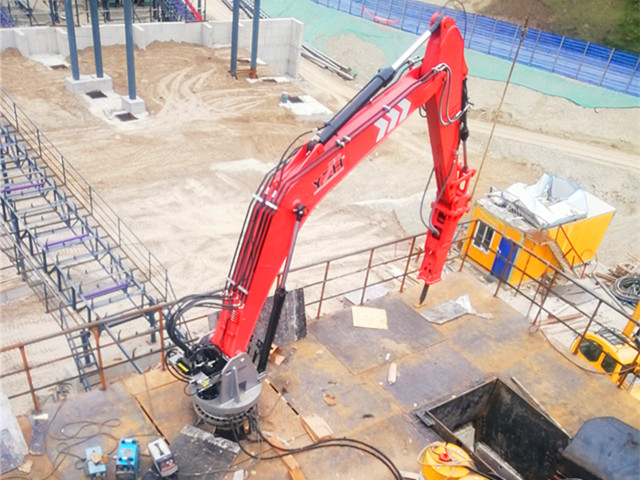
  • The Solution: The safest and most efficient way to handle this is by installing a Pedestal Boom System.

A pedestal boom acts as a permanent maintenance tool. Mounted at the crusher inlet, it allows operators to break oversized rocks or rake material into the chamber remotely. This prevents the physical damage caused by "shock loading" the crusher and eliminates the need for personnel to enter the danger zone.

The Ultimate Guide to Rock Crusher Maintenance and Care: Extending Equipment Lifespan

4. Maintenance Records

Memory is unreliable; data is not. Keeping a detailed logbook is essential for long-term health.

What to Record

  • Date and Time of every service.

  • Parts Replaced: Part numbers and brands.

  • Oil Temperatures: Track trends over time.

  • Operator Notes: Any anomalies reported during the shift.

These records allow you to move from "Preventative Maintenance" to "Predictive Maintenance," ordering spare parts exactly when historical data suggests they will be needed.

Conclusion

The longevity of a rock crusher is directly proportional to the quality of its maintenance. By implementing a rigorous inspection schedule, ensuring clean lubrication, and utilizing modern auxiliary tools like Pedestal Boom Systems to handle operational stresses, you can significantly extend the life of your equipment.

Remember: Maintenance cost is a fraction of the cost of a new machine—or the cost of a week of downtime.

FAQ (Frequently Asked Questions)

Q1: How often should I check the oil in my rock crusher?

A: Oil levels should be checked daily before startup. A full oil change should be performed according to the manufacturer's hours (typically every 500–1000 hours), or sooner if oil analysis shows contamination.

Q2: What is the safest way to unblock a jammed jaw crusher?

A: Never enter the crushing chamber. The safest method is using a dedicated Pedestal Boom System with a hydraulic hammer to break the bridging rock remotely.

Q3: Why are my crusher bearings overheating?

A: Common causes include contaminated oil, incorrect oil viscosity, blocked oil coolers, or over-tightening of the drive belts.

Q4: Can a pedestal boom really reduce maintenance costs?

A: Yes. By preventing "bridging" and allowing for controlled breaking of oversized rocks, you reduce sudden shock loads on the crusher's bearings and frame, preserving the machine's structural integrity.


 Jinan YZH Machinery Equipment Co., Ltd
ABOUT COMPANY
Since 2002, YZH has specialized in providing custom pedestal rockbreaker boom systems for mines and quarries worldwide. We combine 20+ years of engineering expertise with rigorous CE-certified quality to boost your productivity and safety through superior design. We don't just sell equipment,we deliver a partnership built on problem-solving.​​​​​​​
CONTACT INFO
Do you want to become our customer?
E-mail: yzh@breakerboomsystem.com
WhatsApp: +861561012802​​​​​​​7
Tel: +86-531-85962369 
Fax: +86-534-5987030
Office Add: Room 1520-1521, Building 3, Yunquan Center, High & New Tech Development Zone, Jinan City, Shandong Province, China.
© Copyright 2025 Jinan YZH Machinery Equipment Co., Ltd . All Rights Reserved.  Privacy Policy  Sitemap   Technical Support:sdzhidian