
Views: 0 Author: Kun Tang Publish Time: 2026-01-04 Origin: Jinan YZH Machinery Equipment Co., Ltd.
In the mining and aggregate industries, downtime is the enemy. When a primary crusher gets blocked by an oversized rock or "bridging" material, production grinds to a halt. The solution is a reliable Rockbreaker (specifically, a Pedestal Boom System).
But not all rockbreakers are created equal. Choosing the wrong system can lead to frequent breakdowns, safety hazards for operators, and spiraling maintenance costs. Whether you are retrofitting an existing plant or designing a new quarry, understanding the critical features of these machines is essential.
Here is a breakdown of the 7 most important factors to consider when selecting a rockbreaker system.
The mining environment is unforgiving. A rockbreaker must deliver consistent impact energy hour after hour, often in extreme dust and heat.
Impact Power: The breaker must have enough joules (impact energy) to fracture the hardest rock in your quarry without struggling.
Material Quality: Look for booms constructed from high-tensile, wear-resistant steel (such as Hardox). High-quality steel structures resist the immense fatigue stresses caused by vibration and shock loads.
Heat Treatment: Premium components undergo specialized heat treatment to prevent cracking under heavy duty cycles.
For stationary systems, compatibility isn't just about "fitting"; it's about seamless integration with your crushing plant.
Reach and Coverage: The boom must be sized correctly to reach all corners of the crusher box and the feeder, but not so large that it endangers surrounding infrastructure.
Hydraulic Match: The hydraulic power pack must match the flow (LPM) and pressure (Bar) requirements of the hammer head.
Foundation Design: A robust Pedestal Boom System requires a solid mounting base. Ensuring your steelwork or concrete foundation can handle the torque and recoil of the boom is a critical compatibility check.
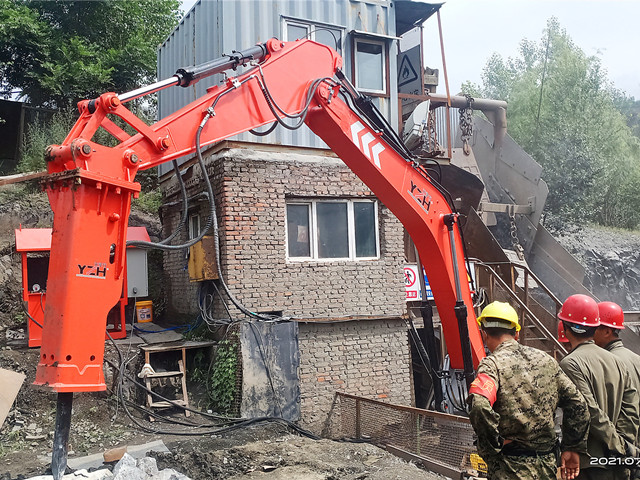
Safety is often the primary driver for installing a pedestal boom. The goal is to keep personnel away from the dangerous crusher opening.
Remote Operation: Modern systems allow operators to control the breaker from a safe, climate-controlled cabin using joysticks or radio remote controls (RRC).
Vibration Isolation: Good design includes shock-absorbing mounting bases that prevent vibration from transferring to the operator's station or the plant structure.
Emergency Stops: The system must have accessible and responsive emergency shut-off mechanisms.
Technology has moved beyond simple mechanics. Advanced features can significantly extend the life of the equipment.
Auto-Lube Systems: Automatic greasing systems ensure the breaker is constantly lubricated, preventing the #1 cause of premature failure: lack of grease.
Soft-Start Systems: For electric-hydraulic power packs, soft starters reduce the electrical load during startup, protecting the motor and the mine's power grid.
Shock Absorption: Advanced hydraulic dampening protects the boom cylinders from the shock waves generated during breaking.
If a machine is hard to use, efficiency drops.
Proportional Control: High-quality hydraulic valves provide "proportional control," meaning the boom moves smoothly and precisely, rather than jerkily. This allows the operator to position the chisel exactly where it's needed on the rock.
User Interface: Controls should be intuitive. Joystick configurations that mimic standard excavator controls reduce the learning curve for new operators.
Smart buyers look beyond the sticker price to the Total Cost of Ownership (TCO).
Energy Efficiency: Unlike diesel mobile excavators that idle and burn fuel, electric stationary booms consume energy only when working. This can result in massive fuel savings over a year.
Maintenance Costs: A purpose-built pedestal boom has fewer moving parts (no undercarriage, no tracks) than a converted excavator, leading to significantly lower maintenance bills.
Finally, does the tool fit the specific application?
Material Type: Breaking soft limestone requires a different approach than breaking abrasive granite. Ensure the breaker attachment (the hammer) is rated for your specific rock hardness.
Environment: If you are operating in extreme cold or underground, you may need specific hydraulic fluids or explosion-proof electric motors.
Selecting the right rockbreaker is a balance of power, safety, and intelligence. By prioritizing durability, ensuring proper compatibility, and investing in modern safety features, you protect your workers and your bottom line.
Don't settle for generic solutions. Choose a system designed for the rigors of the modern mine. Explore our range of high-performance Pedestal Boom Systems to find the perfect match for your crushing plant.
Q1: What is the main advantage of a pedestal boom over a mobile excavator?
A: Safety and Cost. Pedestal booms keep operators out of hazardous zones (remote control) and are powered by electricity, which is much cheaper and cleaner than running a diesel engine on an excavator.
Q2: How do I choose the right size pedestal boom?
A: The size is determined by the reach required to cover your crusher box and the breaking power needed for your hardest rock. Our engineering team can help calculate the optimal boom size based on your plant layout.
Q3: Can these systems be retrofitted to existing crushers?
A: Yes. Most Pedestal Boom Systems are designed to be retrofitted. They can be mounted on steel columns or directly onto the concrete retaining wall of the dump hopper.
Q4: What maintenance is most important for a rockbreaker?
A: Lubrication. Ensuring the breaker tool (chisel) and bushings are greased regularly (preferably via an auto-lube system) is the single most important factor in extending the unit's life.


